


TL;DR: Practicing a hard conversation with AI works like a dress rehearsal. You describe the other person to Claude or ChatGPT, the AI responds as them while you practise, and then it critiques the phrases that would land badly, before the real conversation counts.

I recently had to give constructive criticism to someone on my team. This person is much more relational than I am, comes from a different cultural background, and I know I have a tendency to be a little more confrontational than absolutely needed.
So before the real conversation, I practised it with AI acting as them. It worked well. It helped me avoid certain phrases and approach the talk in a clear way, so that what I meant to say is what actually came across.
Most of us walk into these conversations cold. Below you’ll find the three-step dress rehearsal I run before a hard conversation, and, for paid members, the two prompts that run it and the critique questions I ask.
What You’ll Walk Away With
A way to practise your next hard conversation before it counts, with AI playing the person you’re worried about
A way to hear how your words will land, so you can drop the phrases that cause friction
Where I Draw the Line on AI and People
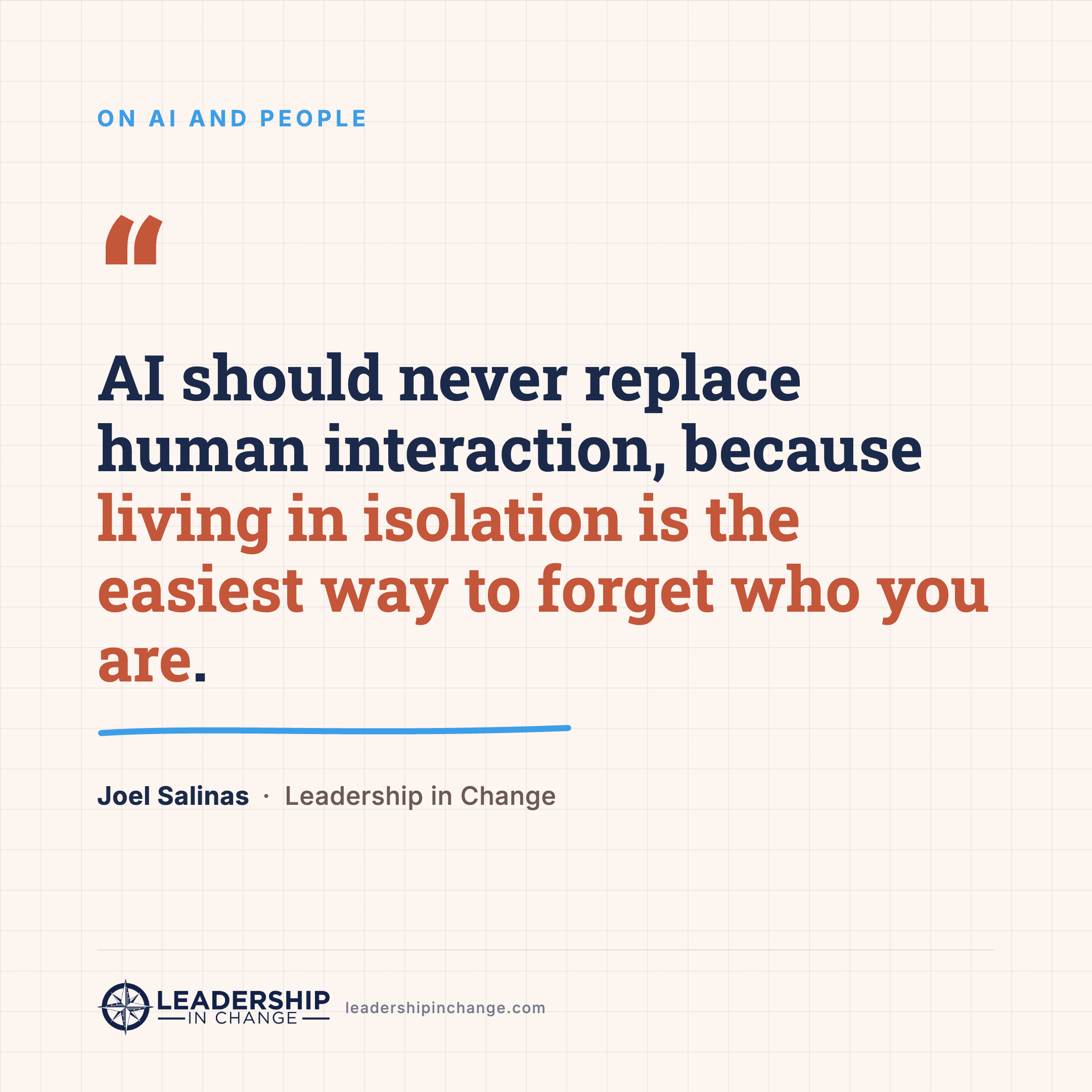
I am a firm believer that AI should never replace human interaction, because living in isolation is the easiest way to forget who you are.
Even though my team is virtual, scattered across the United States and some even outside of the United States, everybody gets together for biannual meetups because there is a need for people to connect. I also make it a point to meet with the people in my team weekly with cameras on when we’re virtual so that we can have that face-to-face interaction.
But that doesn’t mean there is no place for AI.
1. Why Feedback From AI Is Easier to Hear
One piece that I quickly realized is AI can give me feedback in a way that will not offend me because there is no human emotion behind it.
I know that when it tells me something, it’s not based on whether it’s jealous or whether it’s trying to one-up me or whether it’s had a bad day and it’s being negatively influenced by that. So all that to say, especially when prompted right, AI can be as objective as possible and even have critique that’s more welcome than any human.
“Prompted right” matters. Left alone, AI assistants lean toward telling you what you want to hear: much research has found that this flattery, which researchers call sycophancy, is a general behavior of the models. I wrote about why your AI tells you what you want to hear back in June. So the critique only helps if you ask for it to be blunt.
2. The Dress Rehearsal: Let AI Play the Other Person
It’s one of the areas where I’ve really liked AI. When I have to have a hard conversation with maybe a client on something that has not been met on their side and we need to end an agreement. Or with an employee that has not been performing up to task and needs a performance review, or somebody that I need to let go. Or maybe critique that I’m hoping somebody takes but grows from it and not becomes offended by it.
So one of the things that I use is I load a persona just by describing whoever it is that I’m about to have this conversation with, what they’re like, their personality is like, a little bit of their background. Then I practice a conversation with AI acting as them, which gives me a sense, not perfect, but helpful, of how they may take my approach to the conversation.
AI then gives me critique, and then when I do meet with the person, I have already essentially ironed out some of the wrinkles and maybe smoothed out some of the bumps that would have caused friction with that person.
Think of it as a dress rehearsal: you run the whole thing once, with nothing at stake, so opening night goes the way you meant it to.
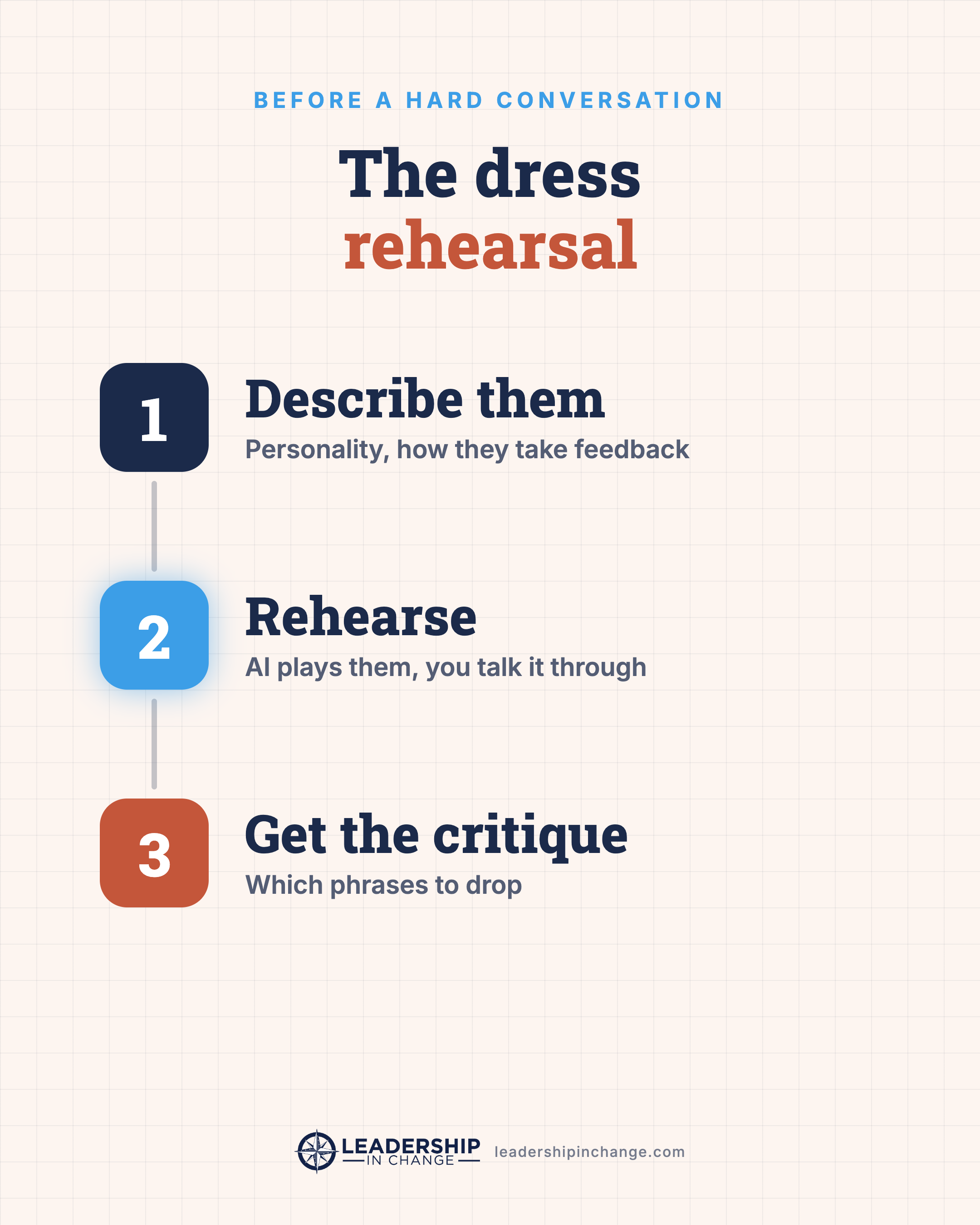
Describe them. Their role, their personality, how they take feedback, and what shapes how they communicate.
Rehearse. Claude (Anthropic’s AI assistant) or ChatGPT plays them, and you have the conversation.
Get the critique. Step out of the scene and ask the AI where you lost them. The exact critique questions I use are below the line.
Do it out loud if you can, because you’ll say the real thing out loud.
I talk my side through with Voice Cursor, a dictation app I partner with, giving you 15% off! (and an affiliate link).
I’m telling you, this is the best dictation app out there in 2026.
3. What a Rehearsal Can’t Do for You
It doesn’t add empathy, doesn’t make up for caring, but it helps improve the approach.
The rehearsal tells me how my words might land. Whether to have the conversation, and what I finally say in the room, is still my call.
If you want the bigger version of this idea, I wrote about how we skip the onboarding with AI and then wonder why it never helps. A persona is just onboarding the AI on one person.
Try the First Move Today
Before any rehearsal, there’s one thing you can do in the next five minutes: say the point of the conversation in one sentence. If you can’t, you’re not ready to rehearse it yet, and that alone tells you something.
So that’s the method. Below is the Dress Rehearsal prompt that makes the AI play the other person and coach you, the exact critique questions it asks, the Hard Conversation Skill I run first, and my own worked example.
💎 The Dress Rehearsal Prompt
One prompt does all three steps: it gets you clear on your point, plays the other person, then coaches you. Start a new chat, paste it in, and answer its questions. Use voice mode if your tool has it.
Paste everything in the block. Type “pause” any time to stop the scene and get the critique.
A Worked Example: My Constructive Criticism Conversation
Here’s how it went before I gave constructive criticism to a team member who is much more relational than I am.
How I described them: much more relational than me, with a different cultural background shaping how they communicate.
How I described myself under tension: a little more confrontational than absolutely needed.
What the critique flagged: Don’t start with small talk, but go to the heart of the issue, and end with a more relaxed convo.
What changed in the real conversation: I avoided certain phrases and approached the talk in a clear way, so what I meant to say is what actually came across.
Run It Before Your Next One
The rehearsal catches the sentence that would have cost you the conversation, while catching it is still free. The caring and the call are still yours.
What’s the conversation you’ve been putting off, and who would you have the AI play first?
Thanks for reading,
Joel
Questions Leaders Are Asking
Can I practice a hard conversation with ChatGPT or Claude? Yes. Describe the other person, ask the AI to stay in character as them, and have the conversation. Then ask it to step out and critique your phrasing. It gives you a sense, not a perfect prediction, of how your approach will land.
Isn’t using AI to prepare for a human conversation cold? It would be if it replaced the conversation. It doesn’t. The rehearsal happens alone, and the real conversation still happens face to face. AI improves the approach; it doesn’t add empathy or make up for caring.
How do I stop the AI from just telling me I did great? Ask for it directly. AI assistants lean toward agreeing with you, so the prompt has to say “don’t tell me it went well unless it did” and ask for the exact phrases that lost the other person.
When should I not use AI for a difficult conversation? When it involves a legal, HR or safety issue. Bring in HR or counsel first. And never use it as a substitute for showing up and listening.
Joel Salinas is an AI Strategy Coach and entrepreneur. AI is everywhere; judgment is scarce. Joel helps founders and leaders adopt AI without outsourcing their judgment to it, and he builds the systems too. Creator of the AI Leadership Triad.
Written by a human, for humans.
Affiliate links included.
would've saved me from a few rough sales calls… rehearsing with AI as the other person is clever
I like rehearsal as a use case, especially because the real conversation still has to happen. The risk I’d want to watch is the persona becoming a convincing version of my assumptions about someone. I’d want the rehearsal to challenge those assumptions too, not only help me phrase them better.