


TL;DR: AI distraction is harder to catch than email distraction because AI produces finished work. Behavioral designer Nir Eyal defines any activity you didn’t plan in advance as a distraction, no matter how productive it looks. Deciding what you’ll use AI for before you open it is the filter that separates real traction from an expensive afternoon.
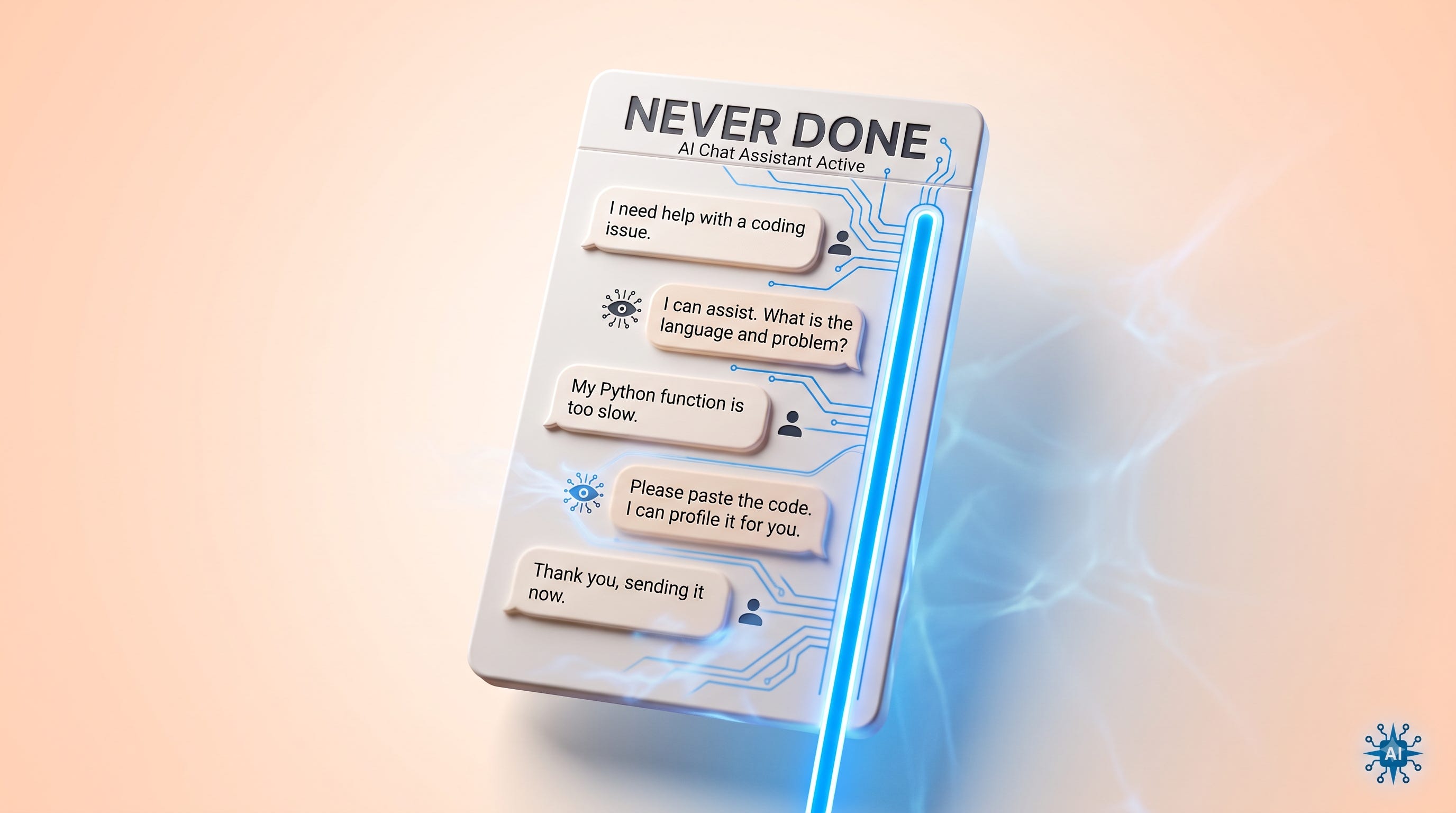
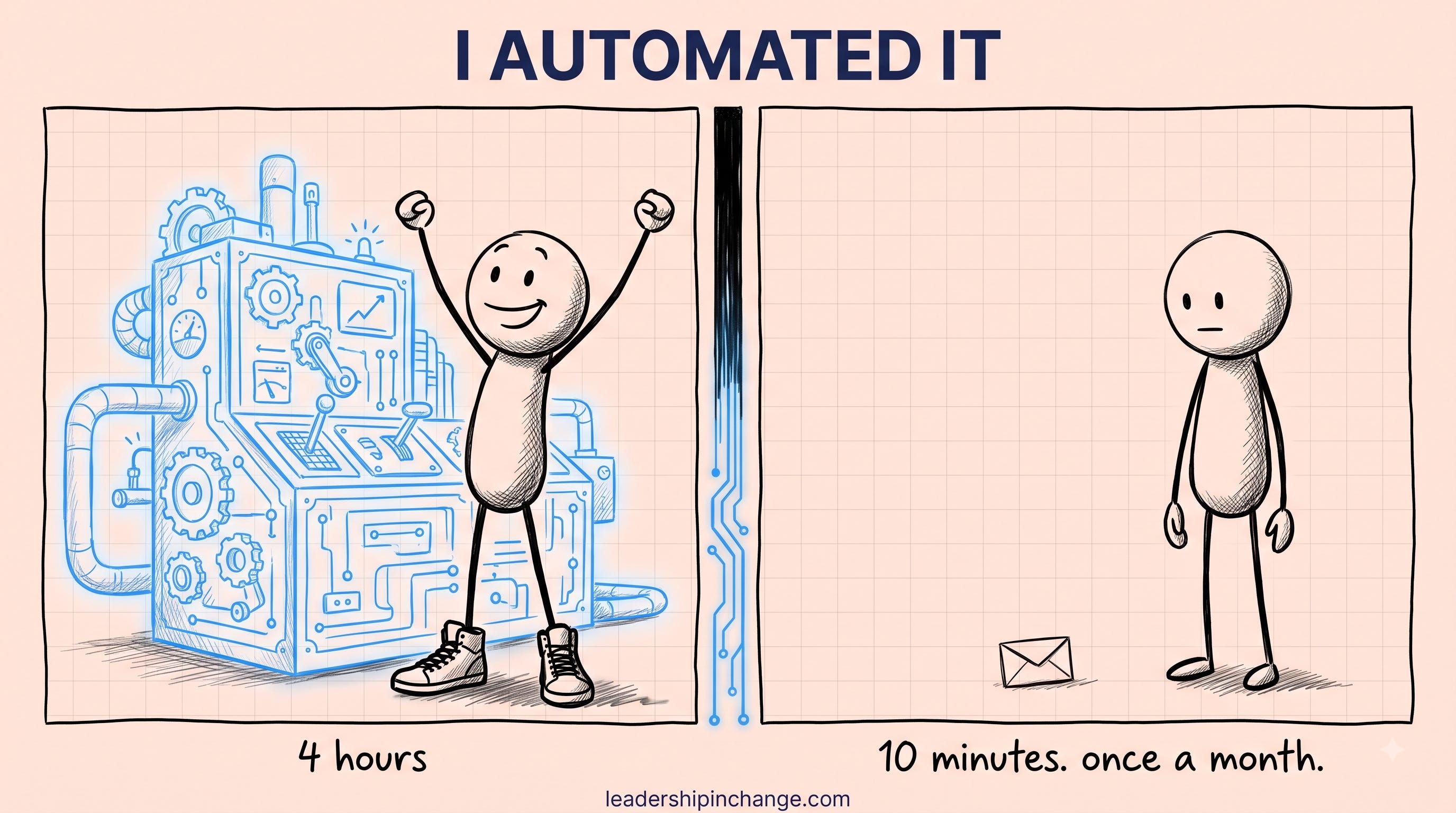
So I’ve done this more than once now. Because it’s so easy to create a tool or create an app, I’ve gone and built one, spent four or five hours on it, and replaced a task that generally takes me ten minutes once a month.
The app works. I still use it. And at that rate it has to keep running for more than two years before it’s paid for the afternoon it cost me. I never stopped in the middle of it to ask the only question that would have saved me:
is this a good use of my time, or is it just constant tinkering?
I didn’t have language for that until I sat down with Nir Eyal, who wrote Hooked, the book a generation of product teams used to build habit-forming apps, then wrote Indistractable. He handed me the test, and I’ve been failing it in a very specific way ever since.
Here is the breakdown.
What to Remember
The one-line test that decides whether your last AI session was work or avoidance, and why it has nothing to do with what you were doing
Why your to-do list is the wrong tool for catching this, and the one condition that has to be true before you drop yours
Distraction has almost nothing to do with the activity
Traction and distraction both come from the Latin trahere, to pull, and both end in the same six letters, action. So distraction isn’t something that happens to you while you’re minding your business, but a thing you did that pulled you away from what you’d already decided to do. Which gives you the test:
“Anything that is not what you said you were going to do in advance is by definition a distraction.”
Watching fútbol for three hours isn’t a distraction if you put it on the calendar. Answering a single email is one if you didn’t.
The distractions that look like work are the dangerous ones
Here’s where it got uncomfortable, because Nir went straight at the respectable kind. He described sitting down with one big important task, deciding today’s the day, and then figuring he should probably check some emails first. Forty-five minutes later, what was I doing again?
“Just because something is a work-related task doesn’t mean it’s not a distraction. In fact, that’s the worst kind of distraction because you don’t even realize you’re distracted.”
His line for it: email seems to justify itself. I said on the recording that this was hitting close to home, and I meant it.
AI doesn’t just look like work. It produces work.
This is where I think the problem has gotten meaningfully worse since Indistractable came out in 2019, and it’s why I wanted to write this instead of just linking the conversation.
Email is a weak disguise. You spend forty-five minutes in the inbox and at the end you’re holding nothing, so sooner or later the emptiness gives it away. AI hands you an artifact. I walked away from those four hours with a working application, deployed, with a login screen on it. Every alarm I have for “you just burned an afternoon” is calibrated to look for an absence of output, and there wasn’t one.
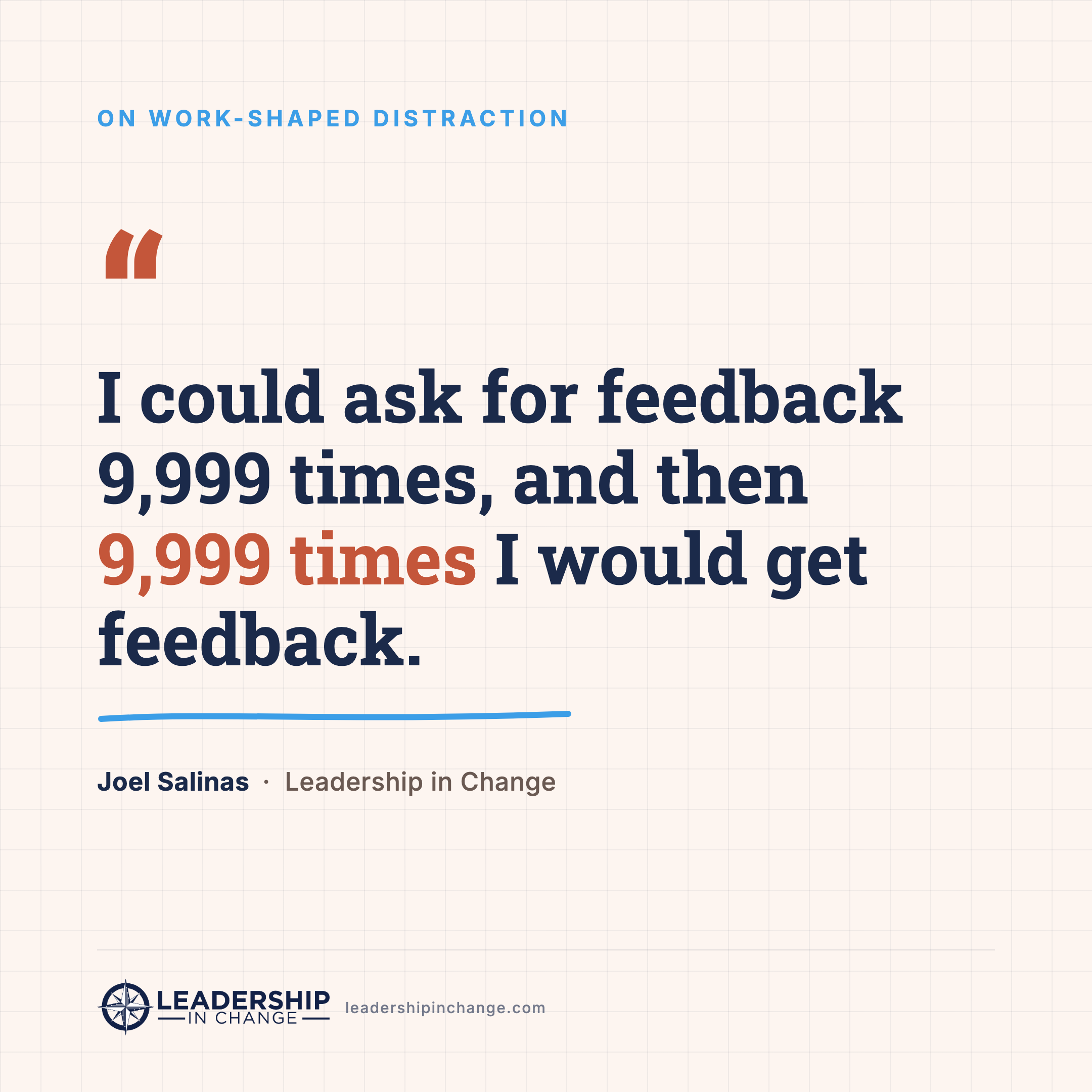
The second version is quieter and I do it constantly as an author. When I’m writing a post, I could ask for feedback every second. I could ask for feedback 9,999 times, and then 9,999 times I would get feedback with detailed suggestions or improvements. There’s no point where the tool taps its watch and tells me the draft is done, and it will happily hand me a fourteenth angle on the same paragraph, and every one of those rounds feels like editing.
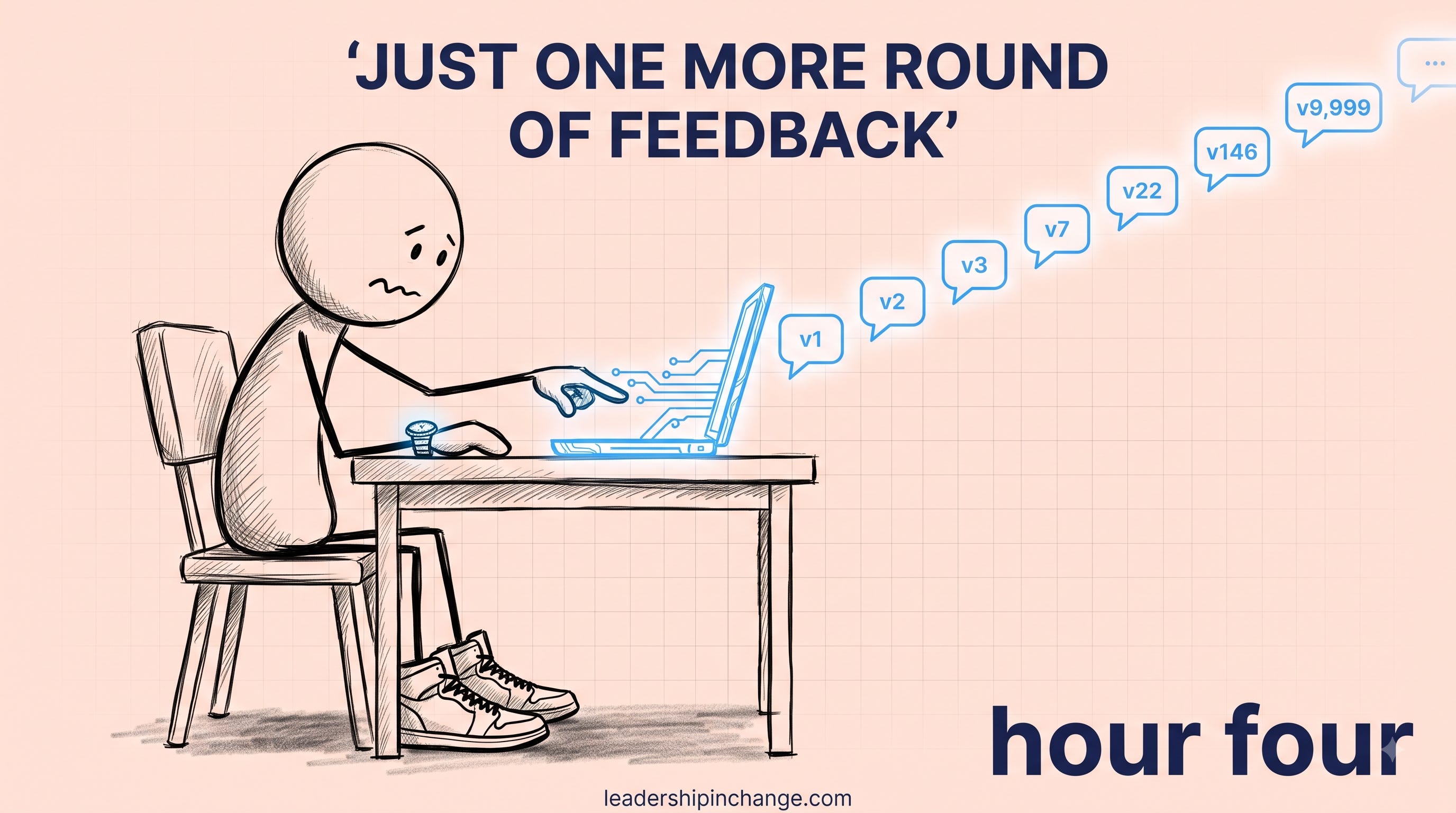
So it’s infinitely available, it never signals completion, and it produces evidence.
Think about it the same way I think about fire or electricity. Genuinely world-changing, and the same fire that heats your house is the one that burns it down. What decides which you get isn’t the fire, but whether you put it somewhere on purpose.
Ninety percent of it is coming from inside the house
The number I had to go back and check twice: we blame the pings, the dings, and the rings, and Nir puts those at roughly 10% of the problem. The other 90% is an internal trigger, which is really just a feeling. Loneliness, boredom, fatigue, uncertainty, anxiety. So when I open Claude to “just look at something,” most of the time I’m not chasing a notification. I’m avoiding the harder thing one tab over, and the tool is generous enough to make the avoidance look industrious. Then Nir closes the escape hatch:
“It’s not your fault. You didn’t create these digital technologies. But it is your responsibility because who else is responsible?”
Where should you actually start with AI?
We all got the tools at the same time, the way everyone eventually got electricity. Having it in the building was never what made the difference. What we did with it was.
I take three diagnostic calls a month. It’s 30 minutes, free, and we work out what you’re actually trying to get to, where your biggest hurdles sit, what your low-hanging fruit is, and how that lines up with what I’ve been seeing elsewhere. Then I tell you the first move I’d make.
A few days later you get it back in writing, two or three pages, yours whether we ever work together or not.
Your to-do list can’t catch this
The obvious move is to write “don’t waste time in AI” on your to-do list and trust yourself. Nir’s argument is that the list is the broken instrument, and this is the part I didn’t want to hear, because I tend to live by mine. A list has no constraints, so you always add more and you always pick the easy item, and then you read back the leftovers night after night until you’ve built a convincing case against yourself.
“There’s nothing wrong with you. You’re not broken. It’s this stupid time management technique we call to-do list that’s broken.”
His replacement is timeboxing, which is just deciding in advance when you’ll do the thing, and it changes what counts as winning: did I work on what I said I was going to work on, for as long as I said I would, without distractions? Worth saying that David Allen made the case for Getting Things Done on this show in May, and the two of them do not agree.
For AI that’s the whole intervention. “Explore what Claude can do” is an invitation to lose a morning. “Forty minutes on the board deck, starting at nine” is a boundary the tool can’t argue with, and when the block ends you’ve learned something the list never tells you, which is how long the work actually takes.
Where I’d push back, gently
I don’t think Nir’s wrong anywhere. But I’d add a warning he doesn’t, because I can see how this goes sideways: dropping your to-do list without actually installing timeboxing is worse than keeping it. We’re built to be to-do list people, and a bad system beats no system by a wide margin. Don’t delete anything on Monday. Put one block on the calendar and see if you keep it.
There’s one more thing he said that’s aimed straight at people like me. Nir calls self-regulation the skill of the century, and then adds: “It’s not going to be, oh, I know how to use AI or I know how to code.” I’ve named three skills that separate leaders in the AI era, and I still think they’re the right three. Nir would tell me there’s a fourth sitting underneath. Here’s the clip.
Every night at eight, a little card locks my work apps, and getting back in means walking to my bedroom and tapping my phone against it. That walk is the entire point. Ten seconds of friction, usually enough to remind me that my eight-year-old is at the table and my three-year-old isn’t going to be three for very long. Nobody’s coming to regulate my calendar. Nir put it about as plainly as it can be put: you can’t make more time, and he doesn’t care if you’re Bill Gates or Elon Musk.
If You Only Remember This
Anything you didn’t decide on in advance is a distraction, including the work-shaped ones. Email justifies itself, and AI justifies itself better, because it hands you something at the end.
Nir puts roughly 90% of distraction on internal triggers rather than notifications, so the fix isn’t a stricter app blocker but noticing what you’re avoiding when you reach for the tool.
Success stops being the checked box and becomes whether you worked on what you said you’d work on, for as long as you said, without wandering.
What’s the last thing you built with AI that you’d never have paid someone else to build for you?
Worth Your Time
A few pieces from other creators I think are worth your attention.
Nick Woodford & Wyndo — Before You Try Another AI Tool, Ask These 7 Questions. The filter I should have run before I built the app, including the best disqualifier in the set: if you’re still consciously deciding to open something three weeks in, it hasn’t earned its place.
Frank Andrade — How to Use AI to Get Smarter (Not Just Work Faster). His confession that “AI was doing the work, and I was just collecting the output” is the same failure mode from the opposite direction.
Cory Blumenfeld — You built something with AI that’s not a business. The sharpest line I read this month on where the freed-up time should actually go: everyone can build now, almost nobody can get the thing into the right hands. (I’ve written for Cory’s publication, so you should know that before you click.)
Questions Leaders Are Asking
Is using AI at work ever a distraction if it’s genuinely work? Yes, and that’s the hard part. Nir Eyal’s test is whether you decided on the activity in advance, not whether it appears on your job description. An unplanned hour inside Claude is a distraction for the same reason an unplanned hour in your inbox is, and it’s harder to spot because you finish holding something.
What is timeboxing, and how is it different from a to-do list? Timeboxing means putting a specific task in a specific slot on your calendar and working it for that whole slot. A to-do list records what you want to do without ever saying when, so it has no constraints and gives you no feedback. Timeboxing changes the measure of success from finishing to whether you worked without wandering.
How do I timebox AI work when I don’t know how long it’ll take? That’s the reason to start. Nir’s argument is that we take roughly three times longer than we estimate because nothing ever measures us. Book a 30-minute block, work it without interruption, and note how far you got. Two or three blocks in, your estimates get dramatically better.
Should I stop using my to-do list? Not on its own. Getting rid of your to-do list without putting timeboxing in its place leaves you worse off than you started. Keep the list as a capture tool, which Nir agrees you need, and move the deciding onto your calendar. Change one thing at a time.
Why do I keep opening AI tools when I have real work to do? Nir Eyal’s answer is that about 90% of distraction starts with an internal trigger, which is a feeling rather than a notification. Boredom, uncertainty, fatigue, anxiety. AI is unusually good at absorbing that feeling because it always responds and always produces something, so the avoidance never registers as avoidance.
About me
Joel Salinas is an AI Strategy Coach and entrepreneur. AI is everywhere; judgment is scarce. Joel helps founders and leaders adopt AI without outsourcing their judgment to it, and he builds the systems too. Creator of the AI Leadership Triad.
Written by a human, for humans.
The finished-work part is what makes this hard to catch. My defense turned out to be structural rather than disciplined; the work I want AI doing runs on a schedule and waits for me before I open the computer, so the decision happened days earlier when I set it up.
My mornings used to start with four logins before any real work, and each one tempted me to do something productive I hadn't planned. Reducing the entry points did more for me than trying to be more disciplined about them.
AI is so the new digital distraction! It's a trail of dopamine breadcrumbs! I sometimes find myself needing to switch tasks or but glued to the prompt machine