


TL;DR: AI data centers bring real investment, energy research and modest local job and wage gains, but they also push up regional electricity costs, strain water in dry places, and have drawn lawsuits and fierce local opposition. Some of the most repeated claims about them, like a bottle of water per ChatGPT question, don't hold up.
I’ve found and I’ve seen more information on data centers and more conversation on data centers in the last two months than the last two years combined. Especially where I am in West Virginia, there are plans to build data centers in this state that have raised alarms amongst people, both amongst people who understand the impacts and those who have heard secondhand myths that are completely untrue.
So what I wanted to do here was create a post that’s not overly long, that’s not overly complex, but essentially gets to the truth of the good, the bad, and the ugly, and the myths of AI data centers. You know, what should worry us, what is complete myth, and as an AI user, or an organization that is increasingly dependent on AI, how does all this matter to you?
Below you’ll find what’s genuinely good about the data center buildout, what’s bad, what’s ugly, and four myths that keep coming up, each with the research behind it, plus what all of it means for the AI tools you choose.
What You’ll Walk Away With
The real numbers behind the data center fights happening in towns like ours, in plain English
Which popular claims about AI’s water and power use hold up, and which don’t
What to look for in an AI company’s policies before you build your work on its tools
The Good: Investment, Efficiency and Local Jobs
On the good, one of the pieces that I think goes to data centers and really AI development as a whole is there is an understood and acknowledged need for better energy consumption, more efficient energy consumption, more efficient water consumption. More jobs will be needed.
Money is going where it never went before. Since AI is expected to bring a lot of money over the next decade, there’s a lot of money going into these developments that would have never gone there in the past.
That money funds better energy and water. There are developments in nuclear energy research, more efficient power usage in facilities, and Google’s water replenishment.
Local jobs and paychecks go up, mostly in metro areas. In one Georgia Tech study, after a data center opens, a county gains about 3 or 4 jobs for every 100 it already had, paychecks rise about $5 for every $100 earned, and as more people come in, there are about 5 more businesses for every 100 already there. It’s going well.
The benefits won’t stay inside AI. As technology improves, research improves, we’re going to see more efficiency and better discoveries across water use and energy use that are going to benefit the entire world, not just AI. If there’s a cheaper way to use electricity or generate electricity, it’s not going to be used just for AI; it’s going to be everywhere.
We’re still early. Recent card data from PNC showed only about 1 in 50 of its customer households paying for an AI subscription, which means adoption is very, very, very early, and it’s going to exponentially increase. And the data centers that are currently available are not enough, so you definitely see these continuing to grow and multiply.
What the research says
Huge investment: the biggest tech companies invested more than $400 billion in 2025, and the International Energy Agency expects roughly three-quarters more in 2026.
Real tax relief in some places: in Loudoun County, Virginia, data centers brought in $1.2 billion in fiscal year 2026, nearly 4 of every 10 dollars in the county’s budget.
Cleaner power, slowly: big tech has announced a wave of new nuclear power deals, though Carnegie Endowment researchers say most won’t deliver power until the 2030s, and Google had committed $77 million to local water projects in 12 states by August 2026.
The Bad: Power Bills, Water and Coal
There’s a lot of that that came from factories coming to cities and driving a ton of people to come to close quarters. In the same way, there are plenty of bads, and those cannot be ignored.
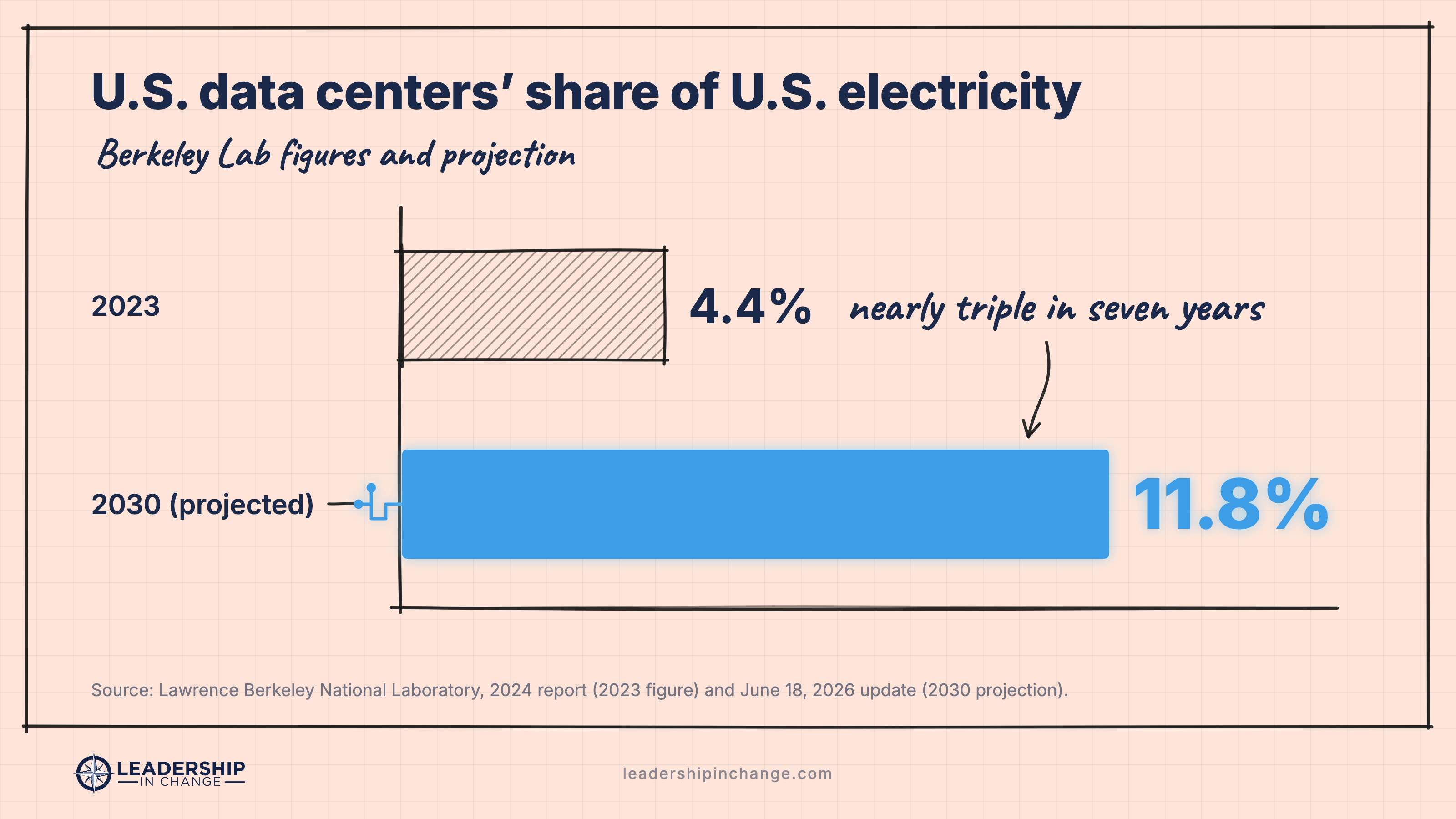
Energy use is the biggest one. Top for me is the energy consumption of these things. Yes, there’s a lot more money going into research of energy efficiency, but based on a recent Berkeley Lab study, a little more than 1 of every 25 units of electricity in the U.S. went to data centers in 2023. It’s projected to go as high as about 1 in 8 by 2028. Global data center use is expected to double by 2030.
Higher electric bills. There’s research pointing to increased costs of electricity because of overtaxed electric grids. So people, for example, in counties where there is a data center are getting a bump in pay, bump in employment, but also a bump in the cost of electricity.
Water in dry places. Data centers use a lot of water. And from a Business Insider analysis in June of 2025, about 4 in 10 planned and existing data centers sit in areas of high or extremely high water scarcity, which is going to put an even higher strain on those things.
What the research says
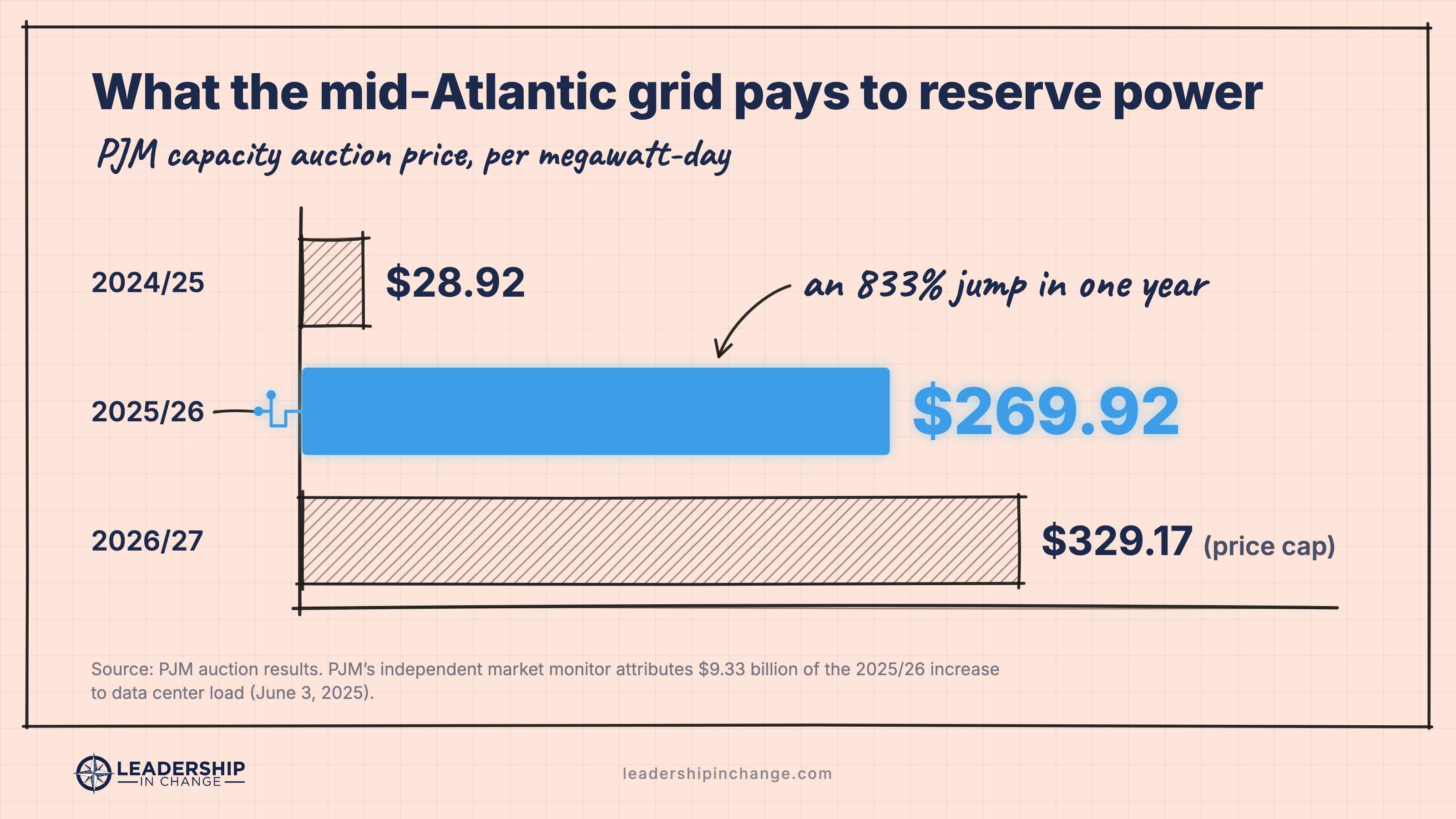
Grid prices jumped more than ninefold: in the mid-Atlantic power grid run by PJM, the price to reserve electricity rose more than nine times from one yearly auction to the next, and the grid’s independent watchdog tied more than $9 billion of that increase to data centers.
Some bills already went up: New Jersey regulators announced increases of about $27 a month for typical customers of one major utility starting June 2025, naming data centers as one of several causes.
Coal plants stayed open: in 2025 the Energy Department used emergency orders to keep five coal plants running, and only about a third of the power plant capacity scheduled to retire that year actually closed.
The Ugly: Bent Rules and Broken Trust
There are many organizations that are pushing and looking to bend the rules as much as they can in their favor in order to make profits and to grow more than their competitors, and often at the expense of the people who live in those areas.
A lawsuit over permits. xAI (Elon Musk’s AI company), as an example, was sued for allegedly running 27 gas turbines without the permits they needed. And the Justice Department shortly after moved to dismiss the lawsuit, arguing it threatened the country’s energy security.
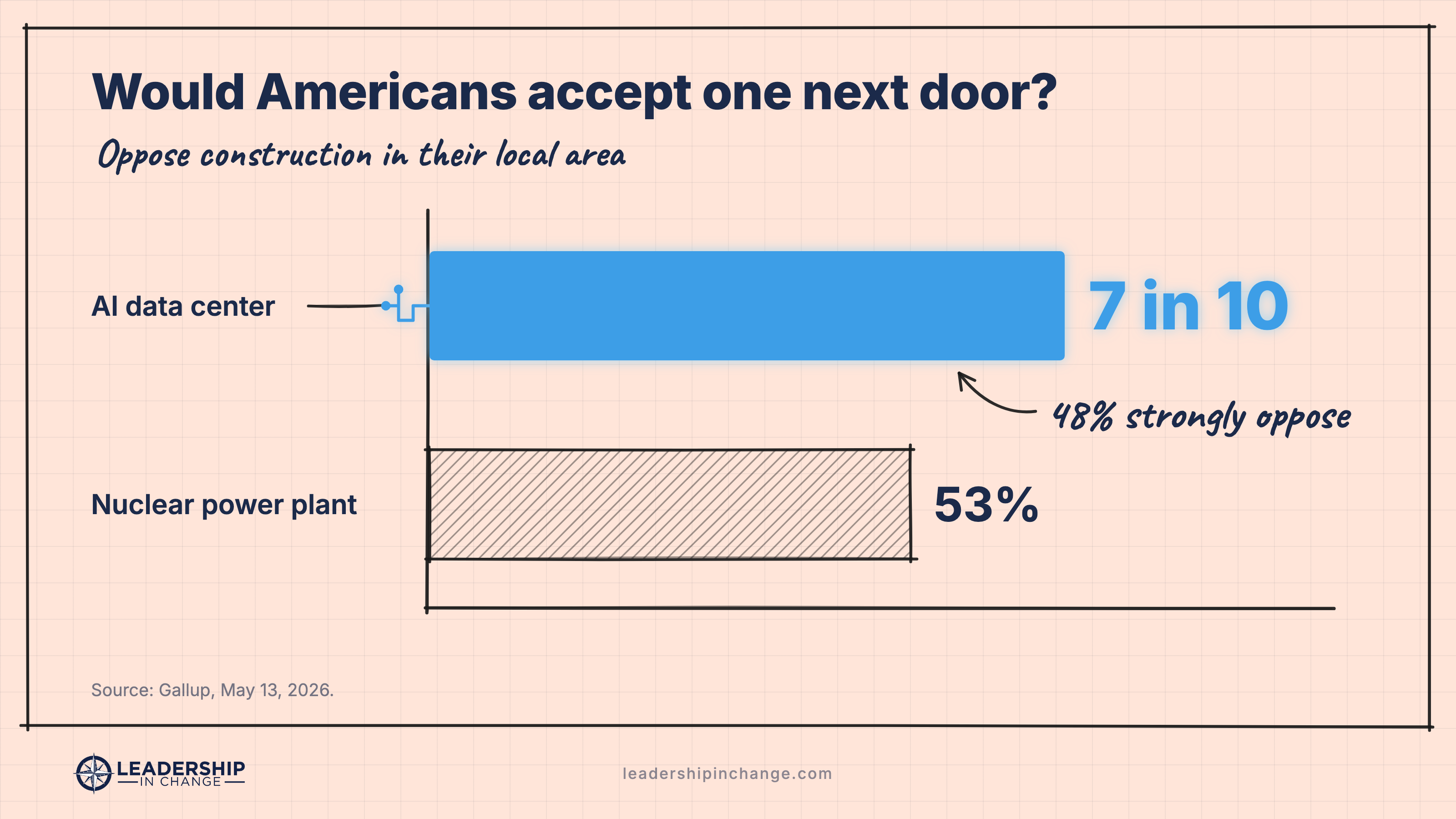
Trust is slipping. Data centers are creating a negative idea of AI in the minds of many people. A recent Gallup study, May 2026, found that seven in 10 Americans oppose constructing data centers for artificial intelligence in their local area.
Workers overseas. So there’s definitely a lot of questionable work done, and that is just in the U.S. Let alone the working conditions that happen outside of the United States, a lot of which is documented from the early days of ChatGPT and at Facebook.
And it’s important to understand this. The humanitarian nonprofit I also serve at takes climate seriously. However, that’s not going to cause us to have a requirement on every employee who drives to the office to have a Tesla or similar electric vehicle. We do understand gasoline hurts the environment, but we also understand that there has to be a balance, and it’s similar with AI.
What the research says
The lawsuit: the NAACP’s complaint, filed April 14, 2026 in federal court in Mississippi, alleges xAI ran 27 gas turbines without the required air permits to power its Colossus 2 data center, and by May the group counted 33. These are allegations, and the case is pending.
The government stepped in: on June 15, 2026, the Justice Department asked to join the case and have it dismissed. Harvard’s Erika Kranz wrote it’s the first time the U.S. has stepped into a citizen lawsuit against a private company to argue it must be dismissed.
Low pay behind the scenes: TIME found that Kenyan workers labeling toxic content for OpenAI took home about $1.32 to $2 an hour, and Facebook content moderators at the same contractor have been in court with Meta since 2022.
Close to home: here in West Virginia, proposed data centers with their own gas power plants in Tucker, Mason and Mingo counties have drawn organized pushback, partly over a 2025 state law that took away local zoning control.
Where should you actually start with AI?
We all got the tools at the same time, the way everyone eventually got electricity. Having it in the building was never what made the difference. What we did with it was.
I take three diagnostic calls a month. It’s 30 minutes, free, and we work out what you’re actually trying to get to, where your biggest hurdles sit, what your low-hanging fruit is, and how that lines up with what I’ve been seeing elsewhere. Then I tell you the first move I’d make.
Afterward I send you an outline of how I’d work on your biggest pain points, so you can decide on your own time.
Four Myths About AI Data Centers
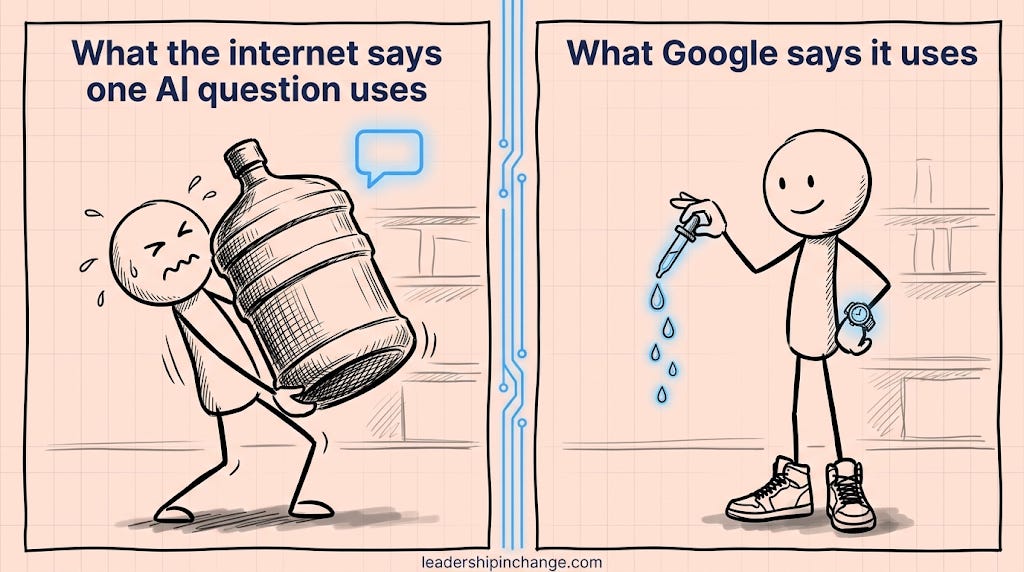
Myth 1: Every ChatGPT question drinks a whole bottle of water
That came from a 2023 study. There’s been a lot that has come up after that, and the numbers are not close to that. It’s just not backed up with data.
Where it started: a 2023 study estimated roughly one bottle of water for every 20 to 50 answers from an older model, GPT-3, counting water used at power plants.
What Google says now: Google estimates a typical Gemini question uses about five drops of water and about as much energy as watching TV for under nine seconds. That’s Google’s own estimate.
Myth 2: Data centers will collapse the grid
There’s virtually no risk to the global grid. If things continue the way they are, only about 3 out of every 100 units of the world’s electricity will go to data centers by 2030. But there is a risk to individual county grids of being overtaxed.
The local warning is real: in May 2026 the grid’s reliability regulator, NERC, issued a rare Level 3 alert telling utilities to prepare for large data center loads.
Myth 3: Data centers bring a lot of permanent jobs
That’s definitely a claim that organizations are doing. But the truth is, the locals often do not have the required technical expertise to work in these jobs.
Fewer jobs than people expect: city documents for OpenAI’s Abilene, Texas site required at least 57 full-time jobs, per Bloomberg, and a Brookings study found about 100 to 200 jobs in a typical host county.
The pay question isn’t settled: Brookings found no change in wages, while the Georgia Tech study above found a small raise, so the research doesn’t agree yet.
In one economist’s words: “They’re not hiring the local electricians to run them,” UC Merced’s Greg Wright said.
Myth 4: Data centers don’t raise your bill
We talked about it earlier, but there’s evidence of electricity prices rising about $5 for every $100 in counties where data centers are coming because of the strain on the grids.
Local vs. regional: a Rutgers analysis across 24 states found little evidence that a single data center raised nearby bills through 2024. The bigger effect shows up across whole regions, like the mid-Atlantic grid prices above.
What This Means for the AI You Use
And something we need to remember is this. We can’t paint all people with the same brush. In the same way, we can’t paint all AI companies under the same light. Some have responsible use, or at least are attempting to have responsible use. Some have a policy of go fast and break things and say sorry after. And it’s important that, whether you’re using Anthropic (the company behind Claude) or OpenAI or xAI, you understand their policies and their stance on the things that you truly care about.
Read their safety policies:
Anthropic’s Responsible Scaling Policy, OpenAI’s Preparedness Framework, and xAI’s Frontier Artificial Intelligence Framework are all public.
Look at their data center promises:
Anthropic pledged in February 2026 to cover electricity price increases its data centers cause, OpenAI committed in January 2026 to “paying our own way on energy,” and xAI says it’s building an $80 million water recycling plant in Memphis. None of those promises includes numbers on how much energy or water the company’s AI actually uses.
Go deeper:
I’ve written more about this in What the Anthropic Blacklist Means for How You Use AI and The Gym Class That Explains AI Regulation.
Come into using AI with open eyes.
If You Only Remember This
The good is real, from investment and energy research to local job gains, but the costs land close to home on power bills and water.
Some of the loudest claims don’t hold up, including a bottle of water per ChatGPT question and a collapsing grid.
AI companies don’t all behave the same way, so read the policies of the ones you rely on.
Is there a data center proposed near you, and what are people saying about it? Tell me in the comments.
Thanks for your time!
Worth Your Time
A few pieces from other creators I think are worth your attention.
Global Data Center Hub — Meta Promised a Community Compact. The Proof Expires in 2030. A close read of Meta’s $1 billion fund for towns that host its data centers, and why the benefit it points to ends when construction does.
Kamil Banc / AI Adopters Club — No, Data Centers Aren’t Draining the Rivers. But Your Town Might Be Next. The fairest breakdown of data center water use I’ve read, separating viral myths from the real strain on a small town.
This Week in AI — Compute Shortage Explained: Why Everyone Is Suddenly Hitting Claude Limits. A plain look at why AI companies keep racing to build, and why towns worry about who pays for the grid.
Questions Leaders Are Asking
How much electricity do AI data centers use? Berkeley Lab estimates U.S. data centers used a little more than 1 of every 25 units of the country’s electricity in 2023, and projects as much as about 1 in 8 by 2028. Worldwide, the International Energy Agency expects data centers to use about 3 of every 100 units by 2030, roughly double their 2025 use.
Do data centers raise electricity bills? The local effect is small so far, and the regional effect is clear. A Rutgers analysis found little evidence that a single data center raised nearby bills through 2024, while the mid-Atlantic grid’s independent watchdog tied more than $9 billion in one year’s costs to data centers, and New Jersey regulators named data centers as one cause of higher bills in 2025.
How much water does one AI prompt use? Google estimates a typical Gemini text prompt uses about five drops of water. The viral bottle-of-water figure came from a 2023 estimate covering 20 to 50 answers from an older model and counting water used at power plants. The bigger concern is local, since about 4 in 10 data centers sit in water-stressed areas.
Do data centers create local jobs? Some, but fewer than people often hear. A Georgia Tech study found a county gains about 3 or 4 jobs for every 100 after a data center opens, and Brookings found roughly 100 to 200 jobs in a typical county. As UC Merced economist Greg Wright put it, “They’re not hiring the local electricians to run them.”
How can I choose AI companies responsibly? Start by reading what each company publishes. Anthropic, OpenAI and xAI each publish a safety framework, and some have made public promises about the energy costs of their data centers. Compare those policies with the values that matter most to your organization.
Joel Salinas is an AI Strategy Coach and entrepreneur. AI is everywhere; judgment is scarce. Joel helps founders and leaders adopt AI without outsourcing their judgment to it, and he builds the systems too. Creator of the AI Leadership Triad.
Written by a human, for humans.