


TL;DR: The death of SaaS is real, but half the leaders reacting to the SaaSpocalypse are misreading it. Agentic AI is killing per-seat pricing for horizontal tools, while mission-critical vertical software stays durable. This 2026 guide shows executives how to audit the SaaS stack, spot what’s exposed, and renegotiate what’s worth keeping.

Before we start, just a quick reminder that only 5 spots are left for our AI Foundations for Leaders workshop on July 18th! Save your spot.
Here’s the problem with the death of SaaS story (Saas is the software your company rents monthly, whose worst sell-off in a decade Wall Street nicknamed the SaaSpocalypse) as it’s being told right now: most leaders are preparing to do exactly the wrong thing.
The SaaSpocalypse is real. Over $1 trillion in software market cap vanished in the first week of February 2026. Salesforce dropped 25%, Adobe 30%, Atlassian 35%.
But… software isn’t dying. What’s dying is one specific pricing model, in one specific category of software, at one specific moment in the cycle. The leaders who reset their entire stack in a panic will regret it by Q3. The leaders who dismiss the whole story as noise will quietly fall behind. The real move is somewhere else, and I’ve been watching clients land on it in the last ninety days.
The Two Wrong Reactions
I’ve already seen the cancel-everything reaction twice this month. Two CEOs trying to tear out every contract over $500 a month because their LinkedIn feed told them agentic AI is about to eat the enterprise. That’s how you end up ripping out the accounting system your finance team actually trusts, and the reason such a high rate of AI implementation failures is seen.
The opposite reaction, “nothing has changed, we’re fine,” usually comes from someone whose team hasn’t yet felt what an autonomous agent can do. They’ll feel it in six months when a competitor does in two hours what used to take three days.
Neither reaction survives contact with what’s actually happening.
What’s Actually Happening
Anthropic’s Claude Code hit a $1 billion annual revenue run rate six months after public launch, one of the fastest enterprise rollouts ever recorded. On January 30, 2026, Anthropic released eleven open-source plugins covering legal, finance, sales, marketing, customer support, product management, and more. Each runs on Model Context Protocol (MCP), the standard that lets AI agents securely pull live data from Salesforce, Google Drive, Slack, and Notion, then act on it.
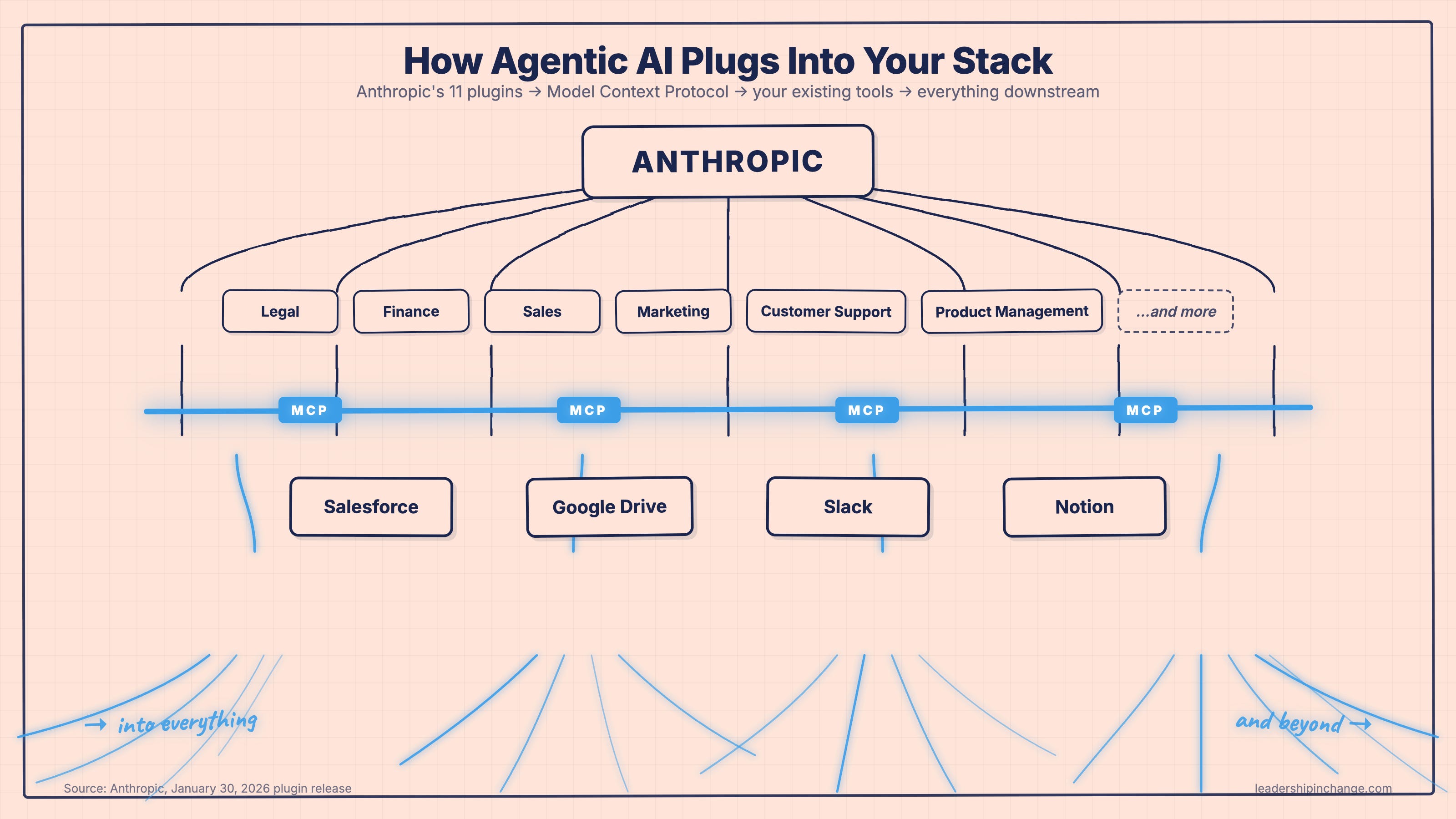
That’s the shift. A capable agent can now read your CRM, draft a contract redline, triage an NDA, update a project in Linear, and summarize the whole thing in Notion, without a human opening a single dashboard.
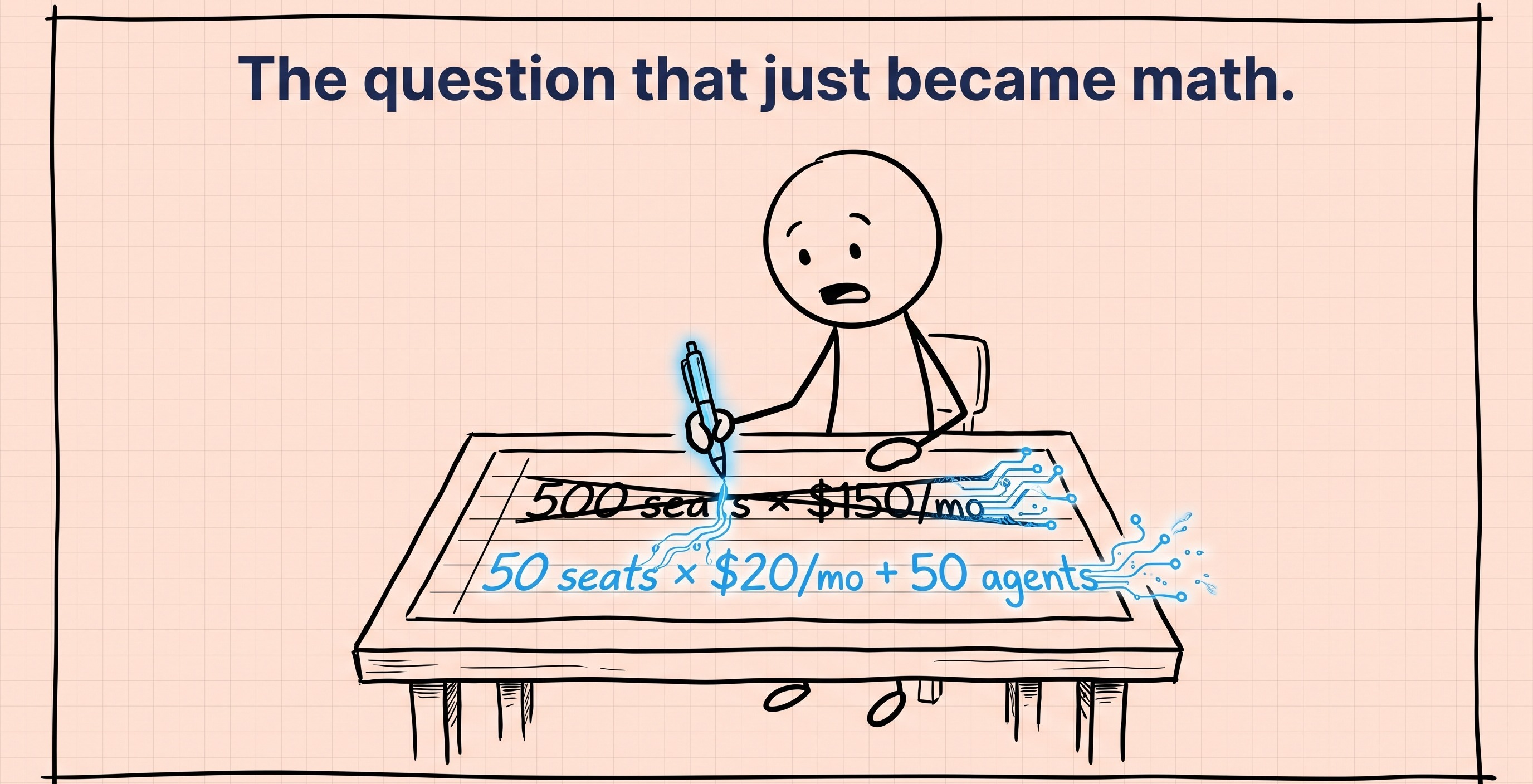
If you’re a CFO staring at 500 Salesforce seats, a question that used to be hypothetical just became math: how many are doing work an agent can now handle?
That’s the question Wall Street just priced in, violently. It’s the same question sitting underneath why 92% of AI investments fail, and it’s the one you should be asking quietly about your own stack before your CFO asks it louder.
Where I Changed My Mind
I’ll be honest. When these headlines started last fall, I pushed back internally. My read was that SaaS had built switching costs no startup could match, and agentic AI would live on top of that layer instead of replacing it.
I was mostly wrong.
What changed my mind was watching it happen inside my own fractional Chief AI Officer work. In the last two quarters, I built custom internal tools for a marketing VP and a nonprofit CEO that replaced paid SaaS seats outright. Both clients now fully own the app. Their staff uses it freely. The only ongoing cost is the token bill for the AI calls, a fraction of what the replaced software billed them. And neither company is waiting on a vendor roadmap they don’t control. This is the same pattern I described last fall in Use AI to 10x Your Impact Without Hiring, playing out against software budgets instead of headcount.
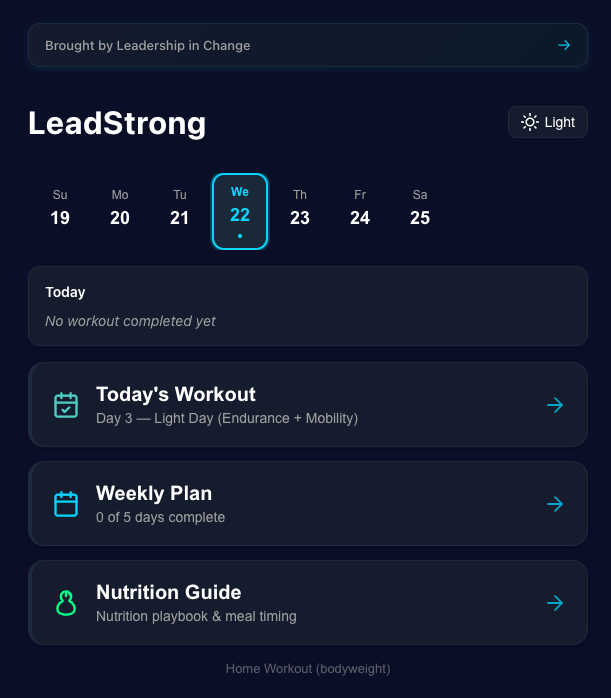
I also lived it at home. My wife and I both paid $15 a month for fitness apps that never quite fit how we train. I spent a weekend on Claude Code building one that did, published it as LeadStrong on my coaching site, and we cancelled both subscriptions. Thirty dollars a month back in the house budget, better fit, no vendor in the loop. Same pattern my clients are running at company scale, running at our kitchen table. Here’s a glimpse…
If this is resonating, two paths forward: Premium members get the frameworks behind pieces like this (join for $49/yr) plus over $1,000 in benefits, or if you want hands-on help auditing your own stack, book a free intro call.
The Durable Middle
Here’s the part the panic is missing. Not every SaaS is equally exposed, and the public markets already figured that out.
Salesforce is trading at a 3.5x revenue multiple, one of the lowest in its public history. Shopify is trading near 13x. Samsara at 12x. ServiceTitan at 11x. Guidewire, the insurance platform, at 9x. These are the vertical SaaS leaders. The market is paying roughly four times more for a dollar of their revenue than for a dollar of Salesforce’s.
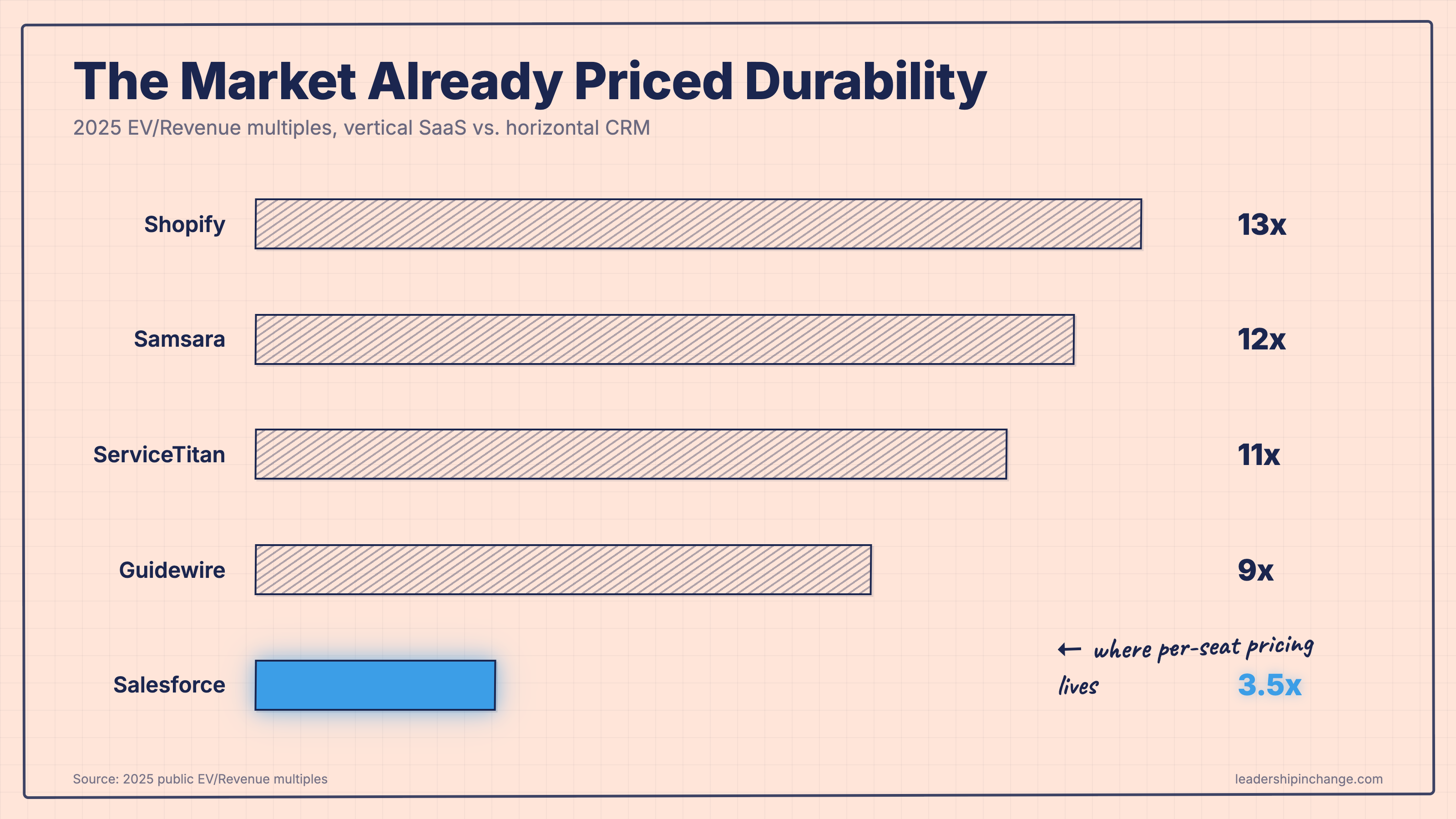
Why? Because an agent can write a follow-up email or update a contact record. It cannot legally parse a property-and-casualty insurance policy without Guidewire’s proprietary compliance data. It cannot run a plumbing company’s dispatch schedule without ServiceTitan’s industry-specific logic. It cannot pull IoT telemetry off a million fleet vehicles without Samsara’s hardware.
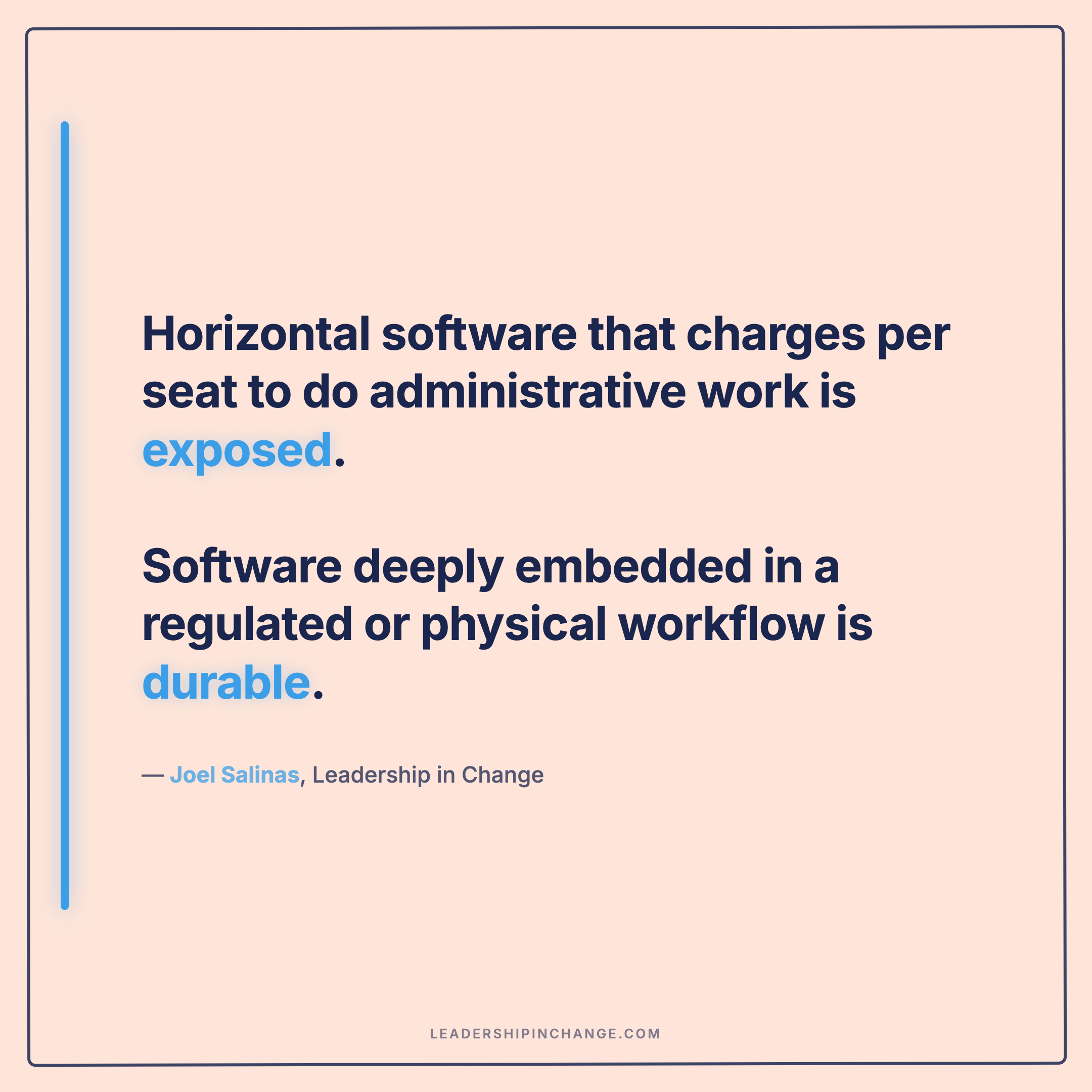
Horizontal software that charges per seat to do administrative work is exposed. Software deeply embedded in a regulated or physical workflow is durable. That’s the actual dividing line.
Sidenote… do you write on Substack? Build smarter, not just harder, with NewsletterCompass.com. As a co-founder, I’m giving you 50% off for life… 👇

What To Do This Quarter
Three questions, asked in order, handle almost every case I run into.
One. Which SaaS charges by the seat? Start there. Those contracts are the most exposed to agentic replacement. Don’t cancel. Ask what percentage of those seats are doing work an agent can now handle, and what the right number looks like 12 months out.
Two. Which SaaS would you genuinely miss on Monday morning? That’s the durable software. The accounting system your CFO trusts. The vertical tool your operations team runs on. Don’t touch it, and its vendor is already building agents into it anyway.
Three. Which SaaS are you paying for because you once needed it, and nobody ever reviewed the contract? Every company has this list. Every fractional CAIO engagement I run finds at least one. Cancel those regardless of what’s happening in the broader market.
The leaders who win the next two years are the ones who stop renting software they could own, one category at a time, while protecting the software that actually runs their business. The ones I coach doing this are already building a quiet structural advantage competitors can’t price-match, because it isn’t on anyone’s P&L line yet.
If it would help to talk this through for your own team, my calendar is here. The first conversation is free.
If You Only Remember This
Vertical SaaS deeply embedded in regulated or physical workflows is trading at roughly four times the revenue multiple of horizontal CRM. The market already knows which side of the line each tool sits on.
Start your audit with seat-based horizontal tools, protect the mission-critical software your team would miss on Monday, and cancel the shelfware nobody ever renegotiated.
Which tool on your current SaaS stack is most at risk of being replaced by something your team could build this quarter? Reply or drop it in the comments. I want to hear which category scares you the most.
Questions Leaders Are Asking
Is SaaS really dying in 2026? No, but a specific category of it is. Horizontal, seat-based administrative software (generic CRM, project management, document workflow) is exposed to agentic AI replacement. Vertical SaaS deeply embedded in regulated or physical workflows is durable. The $1 trillion February 2026 sell-off priced that difference in.
What caused the SaaSpocalypse? Anthropic’s January 30, 2026 release of eleven Claude Cowork plugins, each running on Model Context Protocol (MCP), showed Wall Street that autonomous agents can now handle multi-step workflows across CRM, project management, legal, and finance software. That broke the per-seat pricing math that underpinned SaaS valuations for two decades.
Should I cancel my SaaS subscriptions right now? Not all of them, and not in a panic. Audit which tools are seat-based horizontal utilities exposed to agentic replacement, which are mission-critical vertical software your team would miss on Monday, and which are shelfware nobody reviewed. Act on the third category first, renegotiate the first, and protect the second.
What SaaS tools are safest from AI replacement in 2026? Vertical SaaS platforms deeply embedded in regulated industries or physical workflows: insurance platforms like Guidewire, field service systems like ServiceTitan, fleet and IoT platforms like Samsara, vertical commerce platforms like Shopify. The market is paying 9x to 13x revenue multiples for these versus 3.5x for generic CRM.
How do leaders decide which SaaS to keep vs. replace with custom AI builds? Three questions. Does it charge per seat for administrative work? (Expose.) Would you miss it on Monday morning? (Protect.) Did anyone review the contract this year? (Audit.) Custom AI builds make sense when a tool is horizontal, seat-based, and replaceable with a workflow your own team owns end to end.
Author
Joel Salinas is a Fractional Chief AI Officer for small and mid-sized businesses and nonprofits, handling strategy, hands-on builds, and change management. He writes Leadership in Change and also offers 1:1 coaching for individual leaders.
Written by a human, for humans.
Per-seat pricing for horizontal tools was always a bet on friction lasting forever.
So many amazing opportunities right now.
The insight about horizontal vs. vertical SaaS is spot on,,, it turns out that charging per seat to manage administrative text is highly vulnerable to AI, while proprietary workflow data remains incredibly secure.