


TL;DR AI in hiring is shifting the definition of “qualified” from past credentials to demonstrated signals, how fast a person learns, adapts, and turns new tools into value. Used well, AI widens the candidate field and surfaces people keyword filters reject, while a human still owns the final decision. The résumé is losing its monopoly.
A story in this post stuck with me for days, especially as I was in a hiring season for my team. A engineer applied to five startup roles she’s genuinely qualified for, and kept getting rejected for a reason you will not believe.
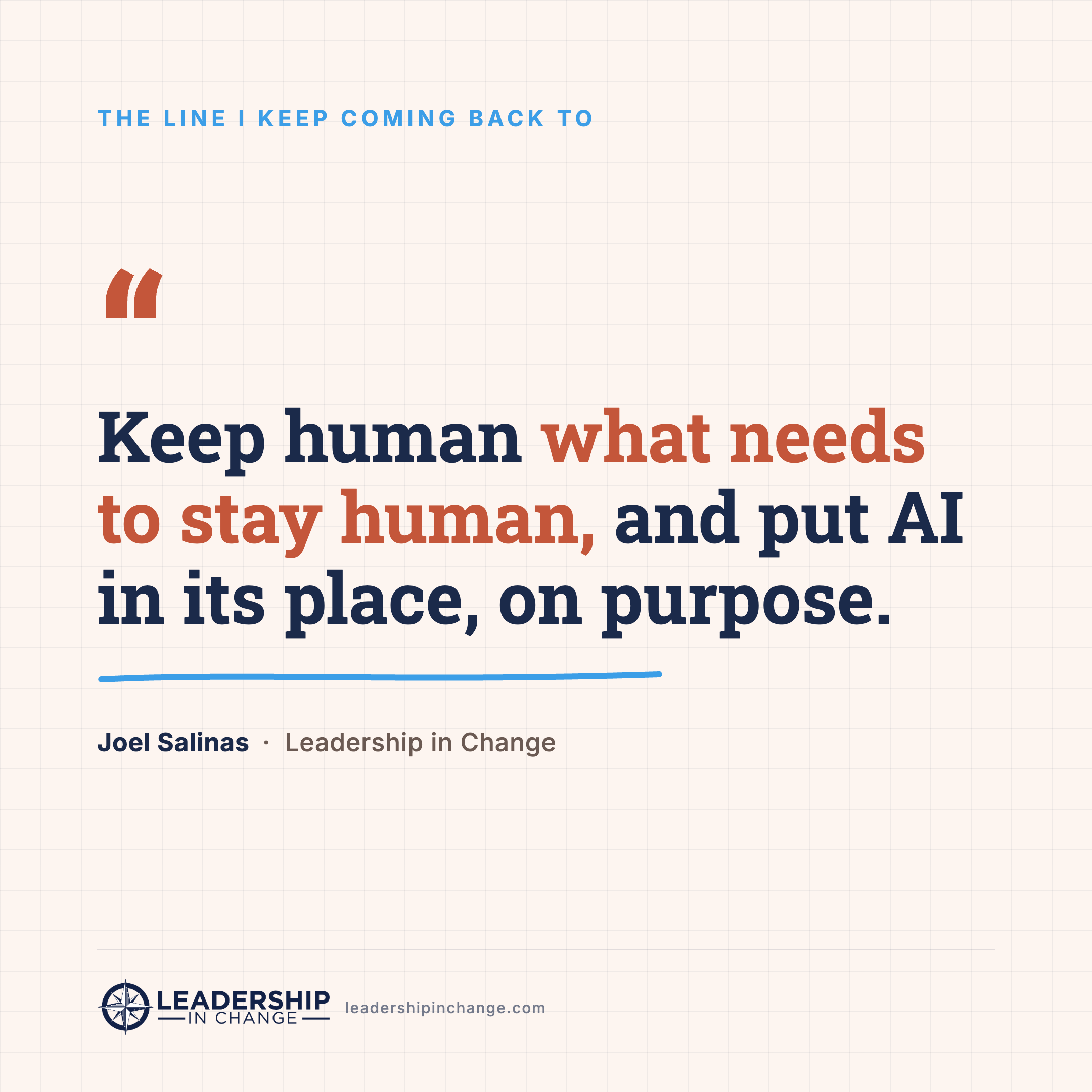
I’ve been chewing on where AI belongs in the work we do and where it doesn’t, and hiring is one of the sharpest places that question shows up. Get it wrong, and you let a machine decide who’s even worth a human’s attention. Get it right, and AI does the sorting it’s good at, while a person still makes the call that actually matters. That’s the line I keep coming back to:
Keep human what needs to stay human, and put AI in its place, on purpose.
That’s why I wanted you to read this guest post. Today’s author, Sebastian Scott, is the co-founder and CEO of Clera, an AI talent platform, and he lives inside this exact problem every day. His case for why “qualified” is about to mean something different is the clearest I’ve read.
What to Keep an Eye On as You Read
The résumé screens for words, not people, and the strongest candidate is often the one a keyword filter deletes first.
AI’s right role here is decision-support, not decision-maker: it widens the field, a person still owns the call.
Train a model on who you hired before, and it will automate your old blind spots behind a cleaner interface, so the bias doesn’t disappear; it just hides.
Here’s Sebastian.
AI Won’t Replace Recruiters. It Will Redefine What Great Hiring Looks Like.
By Sebastian Scott, CEO of Clera
A few months ago, an engineer applied to five startup roles she was genuinely qualified for. But here’s what went wrong: all five rejected her before a human ever opened her file. Her resume said “support engineer,” and the automated filters were scanning for “software engineer.” By any real measure, she was exactly who those teams needed. The system was simply built to match words, not people.
That story is ordinary, which is the problem. For decades, hiring has run on a single premise: find people whose resumes match the requirements of a role. AI is dismantling that premise, and the leaders who understand why will pull ahead of the ones still optimizing a process that no longer reflects how work happens.
The popular debate asks whether AI will replace people. In hiring, that’s the wrong question. AI is changing what we can see about a person, who reaches out to whom, and what the word “qualified” even means.
The Resume Is Losing Its Monopoly
Resumes were designed for a different era. They tell us where someone worked, what degree they earned, and what titles they’ve held. They tell us very little about how someone solves problems, learns, collaborates, or adapts when the work changes.
At the same time, AI is making traditional credentials less predictive. A marketer can now run analysis that once required a specialist. A salesperson produces research that used to need a whole support team. One person at a startup ships what would have taken several specialists a few years ago.
So the question leaders should ask is no longer “What has this person done before?” It’s “How effectively can this person turn new tools into value?” That changes everything downstream.
What they’re really looking for is something the resume was never built to show, and for the first time, emerging talent platforms can measure this directly.
The Future of Hiring Is Signal-Rich, Not Resume-Rich
The opportunity for leaders is to evaluate talent on signals rather than credentials alone. A signal is evidence that predicts future performance: how fast someone learns, how clearly they think, how well they exercise judgment, how they approach a problem they have never seen before. These have always mattered more than a job title. They were simply too expensive to assess at scale, so we relied on the resume because it was cheap.
AI changes that. Used well, it lets a team consider far more candidates, find the patterns that tend to precede success, and notice the people a keyword filter would have discarded. The engineer from the opening is precisely who a signal-based process catches and a resume-based process loses.
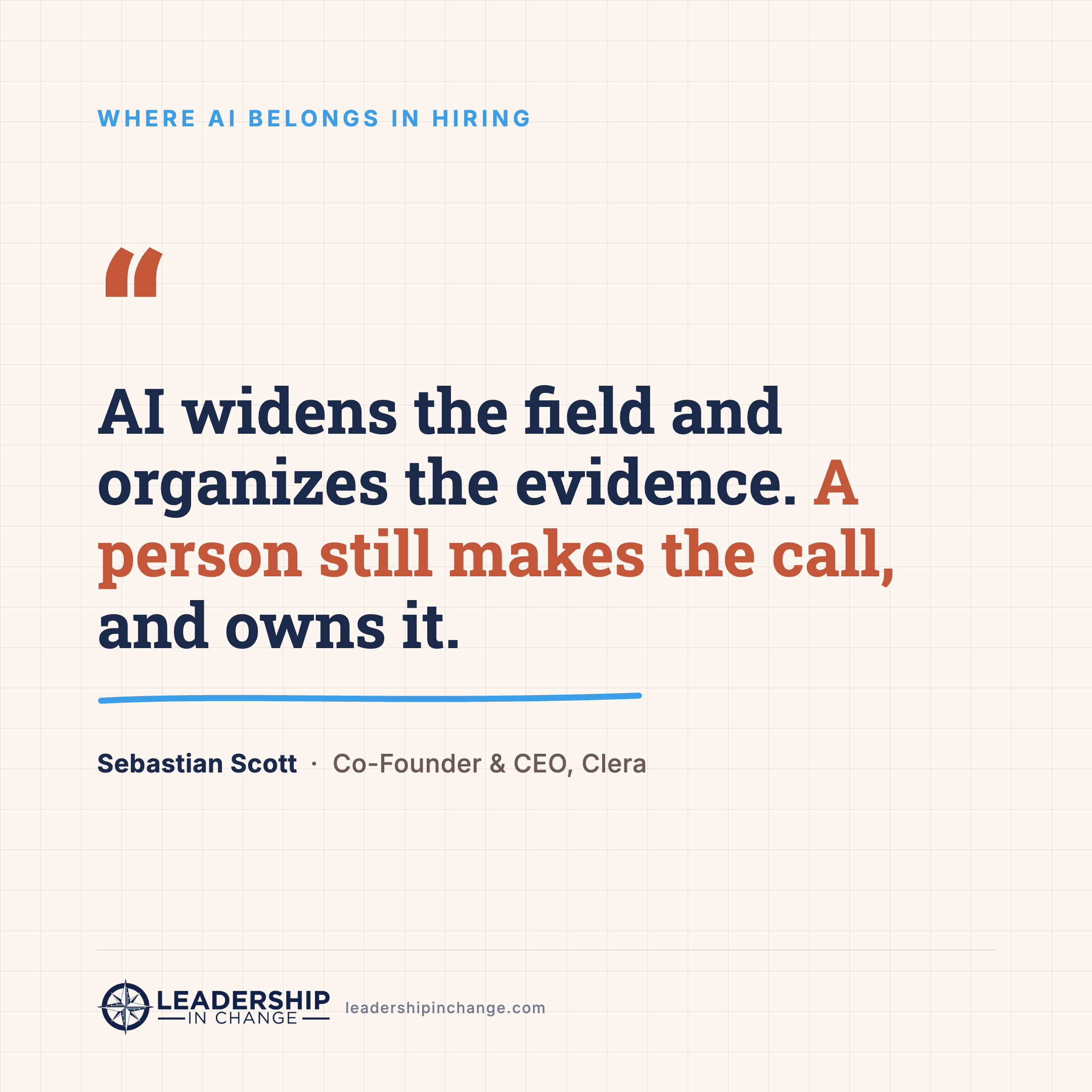
One caution. This does not mean handing the decision to a model. The right design is AI as a decision-support system, not a decision-maker: the machine widens the field and organizes the evidence, and a person still makes the call and owns it.
AI Creates a New Category of Employee
Across industries, a new kind of high performer is also forming. They are not always the most experienced, the most credentialed, or the most senior. What sets them apart is how well they work alongside AI. They turn business problems into tasks a machine can help with, judge the output critically, and pair their own instincts with what the tools surface. The results often outrun anything their resume would predict.
That is the opportunity: organizations can become far more productive. The challenge is that most hiring processes were never built to spot it. They still reward pedigree over adaptability and experience over learning speed. In an AI-enabled economy, those instincts cause companies to overlook their best potential hires.
Finding People Was Never the Broken Part
It helps to be precise here, because the AI-in-hiring conversation blurs very different things together. A new generation of AI sourcing tools, software that scans hundreds of millions of public profiles and returns a ranked list of candidates in seconds, is genuinely useful. (Sourcing simply means finding potential candidates. An applicant tracking system, or ATS, is the database where a company stores and filters the people who apply.)
These tools have one important consequence: finding names is now cheap and close to solved. A long list of plausible candidates has become a commodity.
But finding people was never the part that was broken. The broken part is everything after the list. A name on a list is still a stranger who hasn’t been contacted, hasn’t agreed to anything, and may not even be looking. The strongest people are usually passive candidates, meaning they are employed, heads-down, and not browsing job boards, which makes them invisible to any process that waits for applications. What is scarce now is a candidate who has been reached, understood, checked by a human, and is genuinely interested in talking.
When the Company Applies First
The most underrated shift AI enables isn’t speed. It’s reversing the direction of hiring. For a century, the candidate has done the work: find the opening, tailor the resume, apply, and wait to be screened out. The strongest people never enter that funnel, because the strongest people aren’t looking.
AI makes the opposite model practical. A recruiting system can now identify a specific person, understand what they’re working toward, and surface them to a hiring manager who reaches out first, before that person has applied anywhere. The company expresses interest, and the candidate gets to respond to a real opportunity instead of shouting into an ATS.
This changes the psychology of hiring, not just the logistics. When a company opens the conversation, candidates feel chosen rather than processed, and people who feel chosen show up more engaged and more willing to commit. At Clera, the team has built around exactly this inversion, but the principle holds regardless of the tool. In an AI-enabled market, the advantage goes to the organizations that reach out first and make the case, rather than waiting to be found.
Candidates Are Changing Too
The workforce is evolving alongside employers. Candidates now have tools that help them write, research, prepare, and learn at unprecedented speed, and leaders should expect them to arrive better informed and more technologically enabled than ever.
That creates a new problem for evaluation. If AI can help anyone produce a polished resume or rehearse an interview, those signals become less reliable indicators of potential. The best processes respond by focusing on how candidates think rather than how they present: real-world scenarios, problem-solving exercises, collaborative discussion, demonstrated learning. These give a clearer view of how someone will perform in an environment where AI is available to everyone.
Start With the People Who Aren’t Applying
Employers do not need to rebuild their hiring stack to start moving in this direction. Take one open role and try a different first step. Instead of opening the applicant pile, write down the three or four signals that genuinely predict success in that role and the qualities that matter. Then go find three people who fit those signals and are not applying, or the ones already doing the work somewhere else. Have a human, ideally the hiring manager, reach out to each of them personally with a specific reason they were recognized. While here, look at the last batch of rejected applicants and count how many were filtered on keywords before anyone read the file. That number is the blind-spot rate, and it is usually higher than anyone expects. Do this once and two things become obvious: where the process is matching words instead of people, and how different the conversation feels when the company moves first.
The Ethical Responsibility of Leaders
None of this is free of risk. AI can reduce bias, and it can just as easily manufacture it. Train a model on who got hired in the past, and it will quietly automate yesterday’s blind spots behind a cleaner interface. Leaders who put AI into hiring owe their candidates and their teams a few non-negotiables: be transparent about where AI is used, keep a human accountable for every final decision, protect candidate data, and audit the system regularly for outcomes.
The goal is not efficiency at all costs. Speed is the easy win. Fairer decisions are the harder and more valuable ones, and they only happen on purpose. Trust will become one of the defining competitive advantages of the AI era, and the organizations that earn it will attract the stronger talent.
The Real Competitive Advantage
The companies that win the next decade will not be the ones with the most advanced AI. They will be the ones that combine human judgment and machine capability better than anyone else, and that starts with how they hire.
Leaders who keep asking whether AI will replace people are bracing for the wrong future. The ones asking how to find, recognize, and develop people who are great with these tools are already building it. Hiring is simply where that future shows up first.
Thank you, Sebastian!
Here’s what I keep coming back to. The goal was never to take the human out of hiring. It’s to spend our humanity where it actually counts, on the judgment, the call, the person sitting across from us, and let the machine handle the sorting underneath. Sebastian calls it signal over résumé, and I’d add that the signals he’s describing- how fast someone learns and how well they adapt- are the exact muscles I keep pointing leaders back to in the AI Leadership Triad.
Read more from Sebastian Scott at Clera, or follow him on LinkedIn.
If you want help drawing that line inside your own organization, here’s my calendar. The first conversation is free.
Questions Leaders Are Asking
What is signal-based hiring? Signal-based hiring evaluates candidates on evidence that predicts future performance, how fast they learn, how clearly they think, how they handle an unfamiliar problem, rather than on credentials alone. Signals have always mattered more than job titles. They were just too expensive to assess at scale, so hiring leaned on the résumé because it was cheap. AI changes that math.
Why do strong candidates get rejected by hiring software? Most applicant tracking systems match keywords, not capability. If a résumé says “support engineer” and the filter wants “software engineer,” a qualified person gets cut before any human reads the file. The fix is to define the three or four signals that actually predict success in a role, then check how many applicants were filtered on wording alone.
What is a passive candidate? A passive candidate is someone employed, heads-down, and not browsing job boards, which means they never enter a process that waits for applications. They’re often the strongest people for a role precisely because they aren’t looking. Reaching them requires the company to move first, identifying the person and opening the conversation rather than waiting to be found.
Should AI make the final hiring decision? No. The right design is AI as a decision-support system, not a decision-maker. The machine widens the field and organizes the evidence, and a person makes the call and owns it. Handing the decision fully to a model is how organizations automate their old blind spots behind a cleaner interface and lose accountability for who gets hired.
How can companies use AI in hiring without amplifying bias? AI can reduce bias or manufacture it, depending on the data. Train a model on who got hired before and it will repeat yesterday’s patterns. The guardrails: be transparent about where AI is used, keep a human accountable for every final decision, protect candidate data, and audit outcomes regularly. Fairer decisions don’t happen by accident, they happen on purpose.
Sebastian Scott is the Co-Founder and CEO of Clera, an AI-powered talent platform that introduces top tech professionals to startups directly, not through job boards. He led Clera’s $3M pre-seed round (1984 Ventures, Deel Ventures, and angels from OpenAI, LinkedIn, and Sequoia) and has grown it to 60,000+ represented professionals and 500+ startup clients. Connect with him on LinkedIn.
Joel Salinas is an AI Strategy Coach for leaders at small and mid-sized businesses and nonprofits. 1:1 coaching, team workshops, and AI strategy work built around amplifying what your team is already good at. Creator of the AI Leadership Triad. He writes Leadership in Change.
Clera is an AI-powered talent agent that connects top tech professionals directly with VC-backed startups through iMessage and WhatsApp — no job boards, no applications. Backed by $3M from 1984 Ventures, Deel Ventures, and angels from OpenAI, LinkedIn, and Sequoia — with 60,000+ professionals and 500+ startup clients. See more here…
Written by a human, for humans.
I just finished one recruitment process. One more coming up. That’s why this post caught my attention. Hiring is hard.
I agree that AI should support hiring, not replace human judgment.
But there's one thing AI still cannot objectively assess: why two equally qualified candidates will perform completely differently in the same role.
The difference often isn't skills - it's psychological fit.
As someone working with HR Constellations and Digital Psychology, I've seen that a person's professional orientation, natural motivations, decision-making patterns, and role compatibility often determine long-term success far more than a résumé or an AI score.
AI can recognise patterns in data. Digital Psychology helps uncover patterns in people.
The future of hiring isn't just signal-based. It's psychology-informed.