




TL;DR: Agent-to-agent commerce is live infrastructure in Q1 2026. Three protocols (Google/Shopify's UCP, Visa's AP2, OpenAI's ACP) enable consumer AI agents to negotiate directly with merchant agents. Thirty percent of shoppers already trust AI to complete purchases. For nonprofits, this same infrastructure creates donation pathways inside LLM conversations, eliminating friction between intent and giving.
There’s a difference between being blindsided by change and choosing when to respond to it.
Think of it like watching a storm form on the horizon. You might not evacuate immediately, but pretending you don’t see the clouds building doesn’t make you safer. It just means you’re making decisions without the information you need.
That’s where most leaders are with agent-to-agent commerce right now. Not because they’re ignoring AI (they’re not), but because this particular shift is happening faster than most predictions suggested, and the implications aren’t immediately obvious unless you’re tracking commerce infrastructure.
I reached out to Jennifer Hong (JHong) to write this piece because she’s been tracking this shift closely and I love the perspective she brings. Jennifer writes Natural Intelligence, where she explores how to stay human in the age of AI. As a marketer by day and social scientist 24/7, she’s exactly the kind of rabbit hole seeker who spots infrastructure changes before they become obvious. When she started documenting the agent-to-agent commerce protocols going live this quarter, I knew leaders needed to see what she was seeing.

In this collaboration, she breaks down what’s actually happening in commerce infrastructure, and I’ll help you understand what it means practically for your organization, whether you lead a retail company, a nonprofit, or something entirely different.
In this post, you’ll learn:
What agent-to-agent commerce actually means (beyond the technical jargon)
How three new protocols are reshaping how transactions happen
Why 30% of shoppers already trust AI to complete purchases
What this means practically for leaders across sectors (including a specific opportunity for nonprofits)
Take it away, Jennifer!
Mission: Impossible Commerce: Your AI Is Shopping Without You
Why leaders need to understand agent-to-agent commerce in Q1 2026
“I need sneakers. Budget $150. Must be sustainable. I hate returns.”
Your AI agent no longer needs to Google this, and it doesn’t need to browse Amazon. Instead, it opens a channel to seventeen merchant agents and starts negotiating.
Merchant Agent #1: “We have HOKA in stock. $140 after loyalty discount. Carbon-neutral shipping.”
Merchant Agent #2: “Veja has your size. $135. Certified B-Corp. Free returns anyway.”
Merchant Agent #3: “On Running. $155 but we’ll match $145 and throw in a subscription to our resale program.”
Your agent picks #3. Transaction complete. And you never even opened a browser.
Welcome to A2A2C: Agent to Agent to Consumer
Remember The Fast & The Frictionless? The prediction then was B2AI2C - Business to AI to Consumer - where our personal AIs would shop on our behalf, navigating platforms like ChatGPT and Google for us.

That was halfway right.
What’s actually developing is Agent-to-Agent commerce. The platforms aren’t the destination, instead they’re the infrastructure. And that supersedes predictions from three months ago.
In early January, Google and Shopify announced their co-developed platform named Universal Commerce Protocol (UCP). What this means in a single sentence is that any agent can shop anywhere.
You may have heard rumblings about protocols in the news. Here’s a quick line-up of recent announcements:
January 11, 2026 Universal Commerce Protocol (UCP) - Google/Shopify co-developed
October 14, 2025 Agent Payments Protocol (AP2) - Visa
September 29, 2025 Agentic Commerce Protocol (ACP) - OpenAI
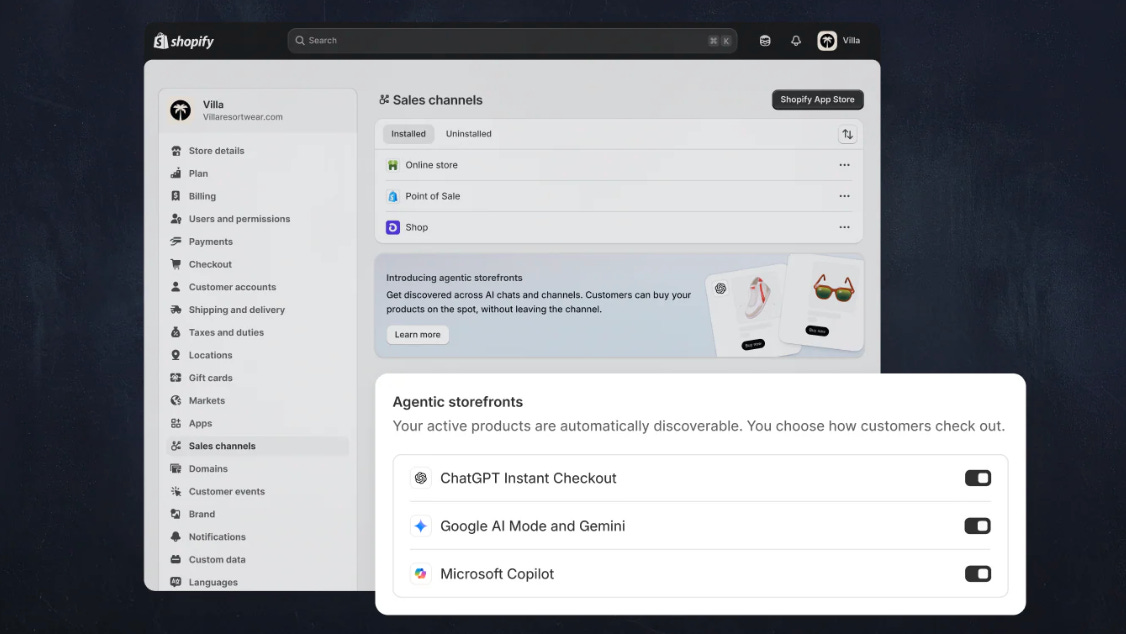
Shopify.com
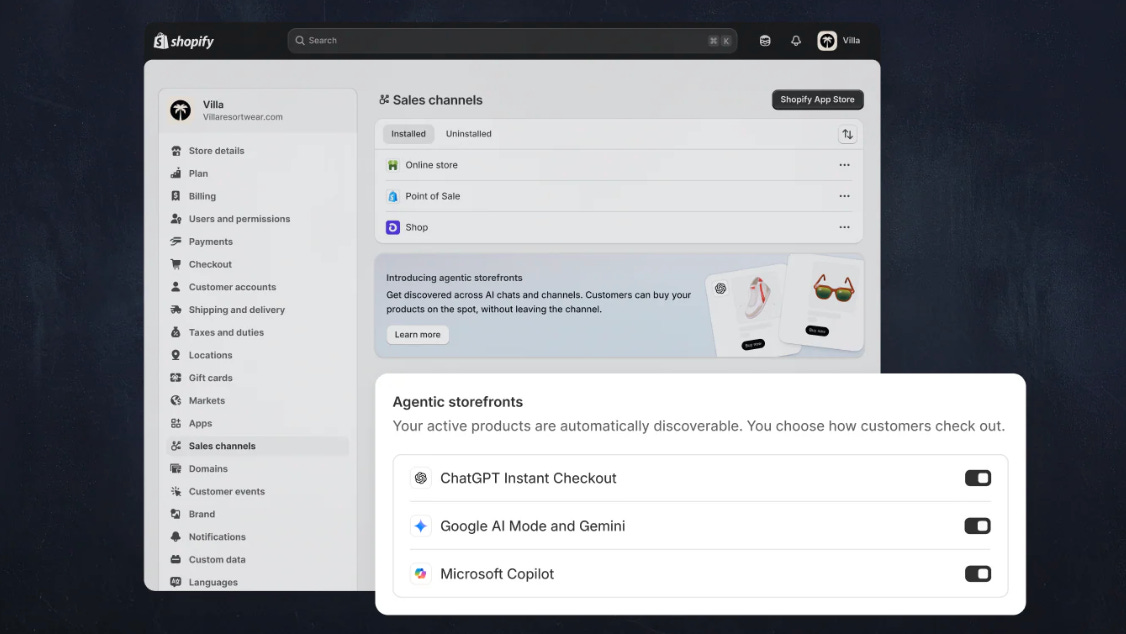
The commonality across all of these announcements is open standards, meaning your personal agent (regardless of where it lives) can transact with any merchant agent (regardless of where they live).
There are three models of agentic commerce emerging:
Agent-to-Site: Your AI agent browses merchant websites directly (current state)
Agent-to-Platform: Your AI shops within platform ecosystems (ChatGPT, Gemini)
Agent-to-Agent: Consumer agents negotiate directly with merchant agents (future state)
This isn’t an action movie with agents, it’s reality in Q1 2026.
Will consumers actually shop this way? (Spoiler: Yes)
I enjoy shopping by myself and am skeptical about AI’s judgment to select purchases. My sister and I recently ran a test to see if Claude, ChatGPT, or Gemini could find a better gift than she did. The parameters: a chic handbag that has specific dimensions and is also transparent (gift recipient is a concert-goer). None of them found her ultimate pick, but Claude did return a pretty good option.
I might be the outlier; 30% of shoppers are already comfortable allowing AI to complete purchases on their behalf. Here
“The data tells a fascinating story about the spending shift we’re witnessing: shoppers are embracing AI and digital tools at a remarkable speed, with nearly half of Americans now using AI to enhance their shopping experience,” said Bruce Cundiff, vice president, Consumer Insights at Visa. Here
Why does this feel trustworthy? Your agent can run locally or in your personal cloud with your rules. Ex: “Never look at my underwear purchases” or “Don’t share my data with advertisers.”
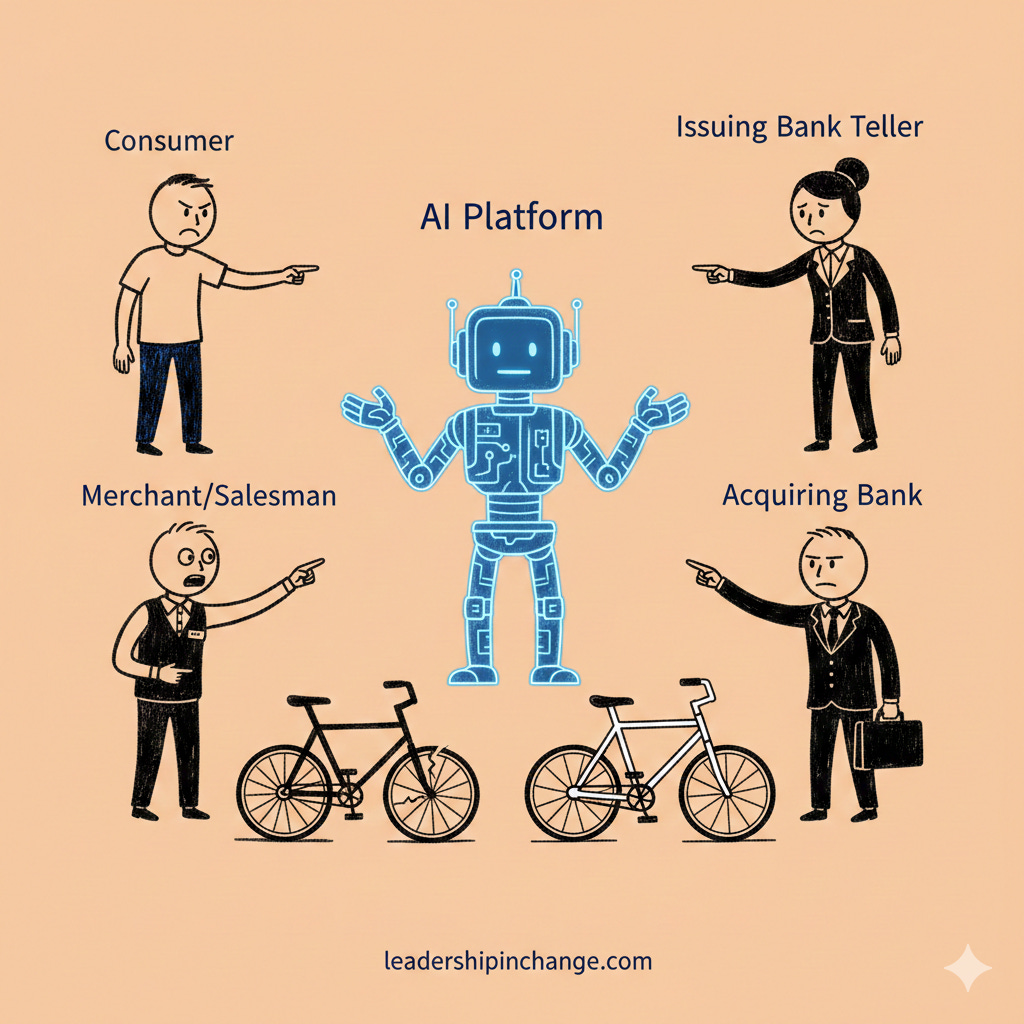
Here’s what keeps payment giants up at night. An AI agent will inevitably make the wrong judgment call, book the wrong hotel night or buy the wrong-colored bike. Who’s responsible? Traditionally, disputes involved four parties: consumer, issuing bank, acquiring bank, and merchant. Now there’s a fifth player - AI platforms. And returns are an extremely expensive component of e-commerce.
Fearless nonetheless, retailers aren’t waiting for the liability questions to be answered. On the merchant side, they’re already setting up “Business Agents.” Google’s Business Agent lets shoppers chat with brands directly on Search - like a virtual sales associate. Lowe’s, Poshmark, and Reebok have already deployed these agents. And brands can train agents based on customer data, provide offers, and enable purchases within the experience.
What’s Changed In Three Months
When we last discussed native check-out, it was about skipping the advertising layer and showing how platforms such as ChatGPT could capture transactions.
But A2A2C means:
Platform independence: Your agent isn’t locked to ChatGPT or Google - it works everywhere
Price discovery at scale, agents choose based on materials, durability, and sizing - not brand names
Negotiation is now automated. Counteroffers happen in real-time. On Running today, HOKA tomorrow if the price is better
It’s moving even faster than I could’ve predicted. Over the holidays, I was wondering how many gift purchases would be touched or influenced by AI. The season is over and the data is in: AI drove 20% of retail sales this past holiday season. Here If this can evolve in the matter of months, imagine what will happen in years? Morgan Stanley has already made its prediction: nearly half of online shoppers will use AI Shopping agents by 2030, accounting for 25% of spending. Here
We aren’t planning for 2030, though. Visa has stated that commercial deployment could begin this quarter.
Thanks, Jennifer!
This is Joel Salinas now, let’s talk strategy.
What This Means for Leaders Who Want to Stay Ahead
I coach leaders on AI strategy. The conversation usually starts the same way: “We know we need to do something with AI, but we’re not sure what matters and what’s just noise.”
Here’s what matters about A2A2C commerce: awareness creates options. Ignorance eliminates them.
You might not be ready to deploy a Business Agent this quarter. That will actually be 99.9% of us. But if you don’t understand that consumer AI agents are already negotiating with merchant platforms, you can’t make informed decisions about your customer experience, pricing strategy, or digital infrastructure.
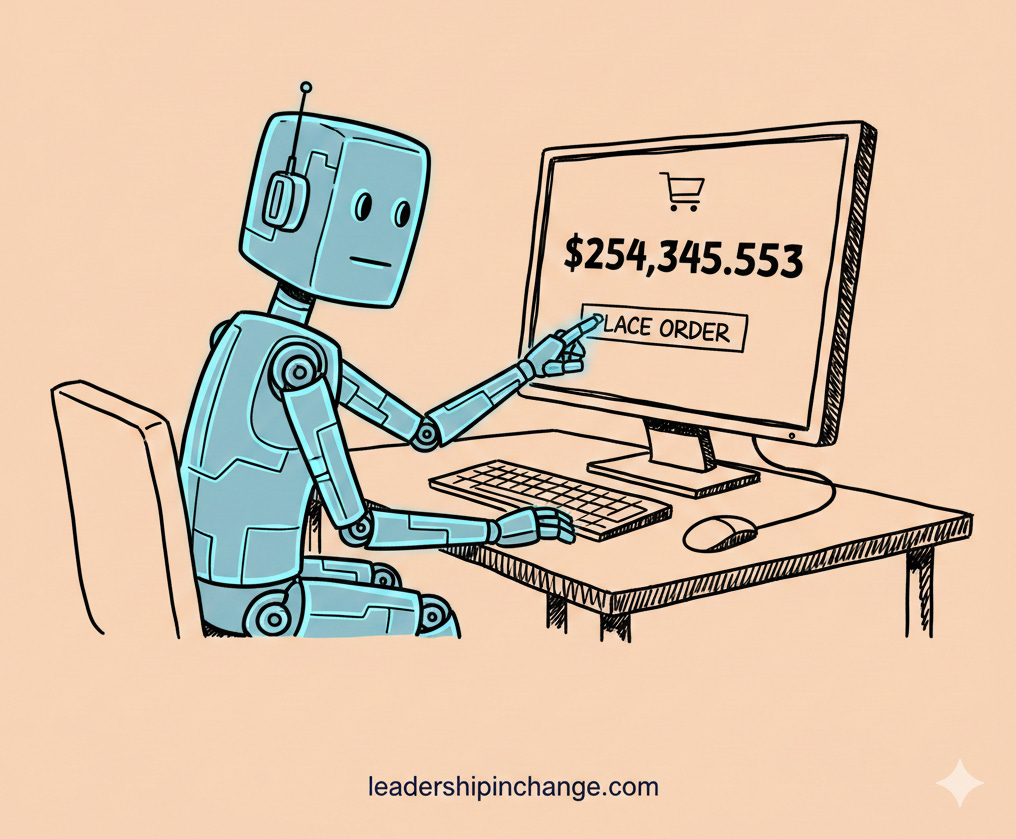
For Commercial Leaders: Three Questions to Ask This Week
You don’t need to overhaul your entire commerce stack tomorrow. But you do need to answer these questions:
1. Is your checkout experience agent-ready?
Run this test: Could an AI agent complete a purchase on your site without getting confused by inconsistent product data, unclear shipping policies, or complicated return processes? If your checkout flow requires human interpretation, you’re creating friction for the 30% of shoppers who are already comfortable with AI-assisted purchases.
2. Where are you vulnerable to price negotiation?
Agent-to-agent commerce means your prices are now compared in real-time against competitors, not just at the point of search. If your value proposition is purely price-based, you’re about to get negotiated into the ground. If it’s based on durability, sustainability, customer service, or brand values, make sure those factors are clearly documented where AI agents can access them.
3. What customer data do your agents need to serve well?
This is the strategic question. Google’s Business Agent lets you train on customer data. That means you can provide personalized recommendations at scale. But only if you know what data matters and how to structure it for agent consumption.
For Nonprofit and Humanitarian Leaders: An Unexpected Opportunity
Here’s what most leaders are missing: while everyone focuses on shopping, there’s a massive opportunity for mission-driven organizations.
If AI agents can complete purchases within LLMs, they can also complete donations.
Right now, when someone asks ChatGPT or Gemini “How can I help with disaster relief in [region]?”, the AI provides information and maybe a link. But with agent-to-agent protocols, that same conversation could end with “Would you like to donate $50 to [verified organization] right now?”
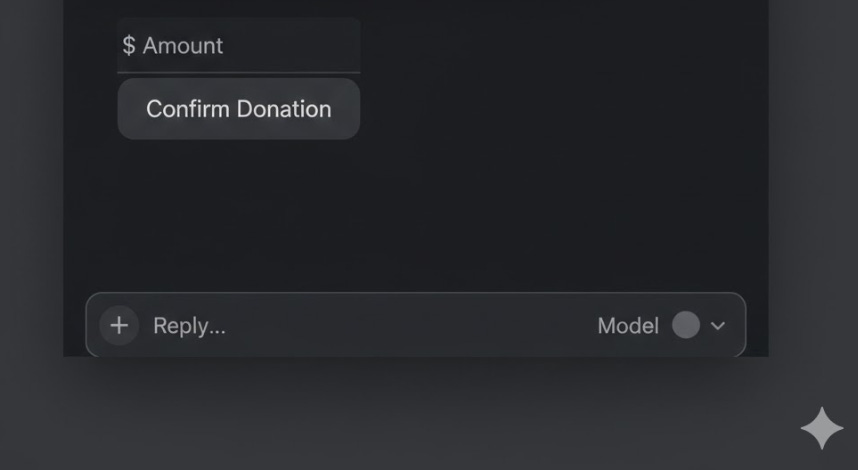
This matters because:
Donation friction kills momentum. Impulse giving is real, and every click between intent and donation reduces conversion.
AI agents can verify organizational legitimacy in real-time, reducing donor hesitation.
Recurring giving can be set up conversationally (”Donate $25 monthly until the crisis is resolved”).
The infrastructure exists today. The question is: which organizations will be first to integrate their donation forms into the platforms where people are already asking “How can I help?”
I’m already talking with humanitarian organizations about this. If you’re in nonprofit leadership and want to explore what A2A2C means for your donor experience, let’s have that conversation.
What to Do Monday Morning
If you’re in ecommerce or retail:
Audit your checkout flow for agent-readability (clear product specs, simple shipping policies, straightforward returns)
Document your value proposition beyond price (what makes you worth choosing when agents compare 17 options?)
Research Business Agents in your sector (who’s already deployed, what are they learning?)
If you’re in nonprofit or humanitarian work:
Identify which platforms your donors already use (ChatGPT, Gemini, Claude)
Map your donation process (how many steps from intent to completion?)
Connect with your development team or platform provider about LLM integration
If you’re in a different sector:
Read the protocol announcements (UCP, AP2, ACP) to understand the infrastructure
Ask: “Does our business model depend on customers not being able to price-compare easily?” If yes, you need a new strategy.
Monitor adoption rates (20% of holiday retail is already a signal, not a prediction)
Regardless of sector:
Share this with your leadership team. Awareness is the first strategic move.
Set a calendar reminder for Q2 2026 to revisit this topic. Things are moving fast.
If You Only Remember This:
Agent-to-agent commerce isn’t a future prediction anymore. It’s infrastructure going live in Q1 2026. Three major protocols (UCP, AP2, ACP) enable any consumer agent to transact with any merchant agent.
30% of shoppers already trust AI to complete purchases. Visa predicts nearly half of online shoppers will use AI agents by 2030, representing 25% of spending. The adoption curve is steeper than most leaders expect.
Strategic awareness beats early adoption. You don’t have to deploy Business Agents immediately, but understanding how agent commerce works gives you options. Ignorance eliminates them.
Nonprofits have an unexpected advantage. If AI agents can shop, they can donate. Integrating donation forms into LLMs could eliminate the friction that kills impulse giving.
What sector are you in, and how do you think agent-to-agent commerce will impact your organization’s customer or donor experience?
Join 3,700+ Leaders Implementing AI today…
Which Sounds Like You?
“I need systems, not just ideas” → Join Premium (Starting at $39/yr, $1,345+ value): Tested prompts, frameworks, direct coaching access. Start here
“I need this built for my context” → AI coaching, custom Second Brain setup, strategy audits. Message me or book a free call
PS: Many subscribers get their Premium membership reimbursed through their company’s professional development $. Use this template to request yours.
‘Nonprofits have an unexpected advantage. If AI agents can shop, they can donate. Integrating donation forms into LLMs could eliminate the friction that kills impulse giving.’
hadn’t thought of this point. either way it sounds like we are in for a lot of change here. great article!
JHong, I'm a writer thinking about attention, trust, and what makes people stop scrolling. This line stopped me: "If your value proposition is purely price-based, you're about to get negotiated into the ground." It made me think about Substack, actually—where the value isn't price, but voice. No agent can negotiate a better version of someone's singular perspective. That feels like the real moat now.